
How to Choose a Flutter Development Company: A Hiring Playbook for 2026
An 18-point vetting checklist, real rate ranges, red flags that filter out bad agencies, and the interview questions that actually work. Written for engineering directors comparing Flutter shops.
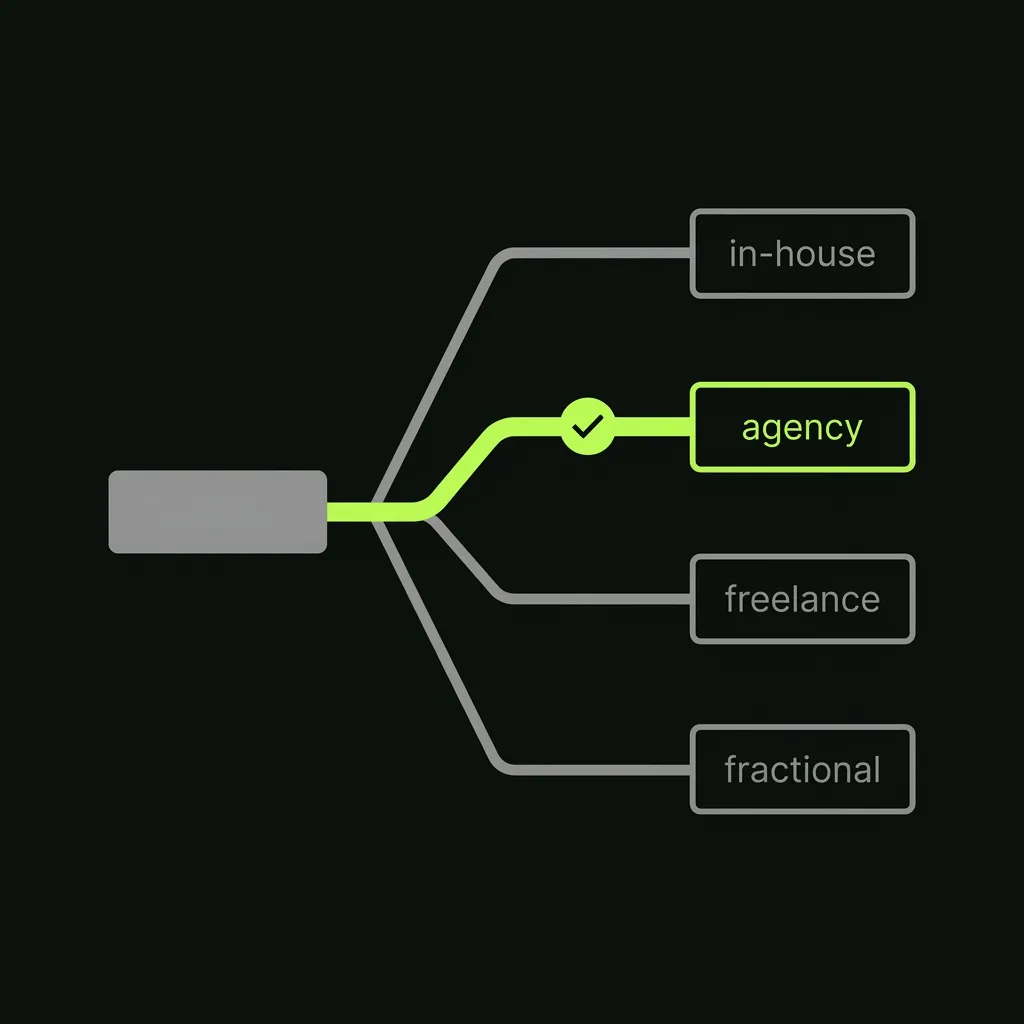
Most Flutter agencies look identical until the project breaks down. The differentiators (state management discipline, plugin ownership, CI/CD maturity, how they handle a broken sprint) aren’t visible on a proposal. This playbook gives you the questions, the skill matrix, and the red flags to surface them before you sign.
Short answer: Evaluate technical depth over portfolio length, ask for a code sample before a commercial proposal, and check whether the team has shipped to production on both stores rather than just built demos. The five hiring routes below differ less on price than on accountability structure. Pick based on which accountability model fits your project’s risk profile.
TL;DR — 18-Point Vetting Checklist
We run every shortlisted agency through a version of this list ourselves before recommending one to a client. Run every candidate through this before the second call.
| # | Check | Pass condition |
|---|---|---|
| 1 | Flutter version on last shipped project | Flutter 3.19+ (Impeller default) |
| 2 | State management used | Riverpod, BLoC, or Provider — can explain the tradeoff |
| 3 | GitHub org or profile | Public repos with real commit history, not just forks |
| 4 | App Store / Play Store links | Live apps with recent updates (2024–2026) |
| 5 | Test coverage on last project | >60% unit/widget, CI runs on every PR |
| 6 | Native plugin experience | Has written or forked a platform channel plugin |
| 7 | CI/CD pipeline | Fastlane, Codemagic, or Bitrise — not manual uploads |
| 8 | Code sample available | Will share a sanitized sample or review session |
| 9 | Project manager included | Named PM, not “the lead dev also manages the project” |
| 10 | Replacement guarantee | Written policy, not verbal assurance |
| 11 | Communication overlap | 4+ hrs daily overlap with your timezone |
| 12 | Pricing model clarity | Fixed-scope or T&M with clear scope change process |
| 13 | References | At least 2 contacts from shipped projects you can call |
| 14 | Bug fix SLA | Written SLA for critical bugs post-launch |
| 15 | IP assignment | Contract explicitly assigns IP to client on payment |
| 16 | Dart proficiency | Can explain null safety and async/await without prompting |
| 17 | AI tooling disclosure | Knows which parts of their workflow use AI-generated code and how it’s reviewed |
| 18 | Honest capacity | Has told you what they won’t do well, not just what they can do |
Zero of these should require a long negotiation to answer. If you get pushback on items 3, 4, 8, or 10, walk.
The 5 Hiring Routes — Honest Comparison
The choice of hiring model shapes accountability more than it shapes cost. Here are the five routes most engineering teams evaluate.
1. In-House Flutter Hire
Best for: Companies with a long-term mobile roadmap, existing engineering management, and the patience for a 3–6 month ramp.
Honest tradeoffs: A senior Flutter engineer in the US costs $130,000–$180,000 in total comp. In the UK, £80,000–£120,000. You own the accountability completely. No agency buffer, no replacement clause. If the hire is wrong, you eat the cost. The upside is full context retention and the ability to build a genuine Flutter culture inside the team. For a startup shipping a first MVP, this almost never makes economic sense. For a company with 3+ Flutter apps in maintenance plus new feature work, it does.
When in-house beats agency: Long product roadmap (18+ months), complex domain that requires deep context, or you’re in a regulated industry where vendor management adds compliance overhead.
2. Fixed-Scope Agency
Best for: Well-specified projects with stable requirements and a client who doesn’t want to manage a development team daily.
Honest tradeoffs: Fixed-scope contracts work when the spec is locked. They break down when requirements evolve, and most apps evolve. The agency’s incentive in a fixed-scope engagement is to deliver what was specified, not what you actually need. Change requests can double the budget. Scope disputes are the most common source of project failure in this model.
When to use it: Rebuild of an existing app with a known spec, custom component build where you control the requirements, or greenfield project where you’ve done the spec work rigorously upfront.
3. Dedicated Flutter Development Team (Augmented Agency)
Best for: Engineering directors who want a predictable monthly capacity, senior oversight, and accountability without the overhead of direct employment.
Honest tradeoffs: This model works when the agency runs a real vetting process, not a staffing arbitrage. The risk is getting sold “senior” developers who are mid-level with senior billing rates. The questions and skill matrix below are specifically calibrated to filter for this.
A dedicated team from a serious shop (see our dedicated Flutter developers) typically means a fixed monthly retainer per developer, a named PM, and a replacement guarantee if performance drops. Our vetting process for a Senior tier runs four stages: take-home exercise, system design call, paired pull request review, and a founder call. Rates from a vetted India-based team with senior oversight run $35–$55/hr per engineer in 2026. US-equivalent oversight at offshore rates is the economic case.
When agency beats in-house: Project duration under 18 months, variable capacity needs, or you want to scale up 2–3 engineers for a sprint and scale back without headcount complexity.
4. Freelance Marketplace (Upwork, Toptal, Arc)
Best for: Small scopes, defined features, or companies comfortable managing developers directly without an agency layer.
Honest tradeoffs: The talent range is enormous. The best Toptal Flutter engineers are genuinely excellent, and priced to match ($80–$120/hr). Mid-tier Upwork has wide variance and high screening time. You own all project management, coordination, and accountability. There’s no replacement path if things go wrong mid-project beyond a new search.
When freelance beats dedicated: You need one engineer for a clearly scoped feature, you have strong internal PM capacity, or you’re filling a skills gap for a specific plugin (e.g., an ARKit specialist for one sprint).
5. AI-Augmented Offshore Team
Best for: Teams who want accelerated delivery timelines and are comfortable with modern development workflows.
This is newer as a category. An AI-augmented team pairs junior-to-mid Flutter engineers with structured AI tooling (Claude Code, Cursor, shared prompt libraries) and senior oversight that reviews and owns architecture decisions. The output velocity is 2–3x a conventional offshore team. The risk is that AI-assisted code can be superficially correct but architecturally weak if the senior oversight layer is thin.
For most product companies comparing time-to-ship, this model wins on calendar time. Our AI-augmented Flutter development approach runs senior-reviewed AI tooling for exactly this reason: speed without sacrificing code ownership.
Skill Matrix — What to Verify Before You Hire
Don’t take a CV’s word for it. Here’s what to probe per skill area.
Dart Proficiency
In our own hiring screens, a Flutter engineer should be able to explain null safety without prompting. In practice, ask them to walk through this code and identify any issues:
Future<String?> fetchUserName(String userId) async {
  final doc = await firestore.collection('users').doc(userId).get();
  return doc.data()?['name'] as String;
}
A competent engineer flags the unsafe cast on line 2 — doc.data() can return a field that isn’t a String, and the cast will throw at runtime. They should suggest using doc.data()?['name']?.toString() or a typed model. If they don’t catch this, their null safety instincts aren’t reliable.
State Management Depth
Ask which state management approach they used on their last project and why. There’s no wrong answer among Riverpod, BLoC, or Provider. There is a wrong kind of answer. “We used Riverpod because it’s modern” is a yellow flag. “We used Riverpod because our state graph had complex cross-widget dependencies and BLoC’s boilerplate was slowing down the team” is what competence sounds like.
Native Plugin Experience
Ask: “Can you describe a time you had to write platform-specific code in Flutter?” A team that has only used off-the-shelf pub.dev packages will eventually hit a wall on a production app. They should be able to describe writing or modifying a MethodChannel or EventChannel implementation, and the difference between how Android and iOS handle the callback threading.
App Store and Play Store Experience
Ask for the exact steps they follow to prepare a release build for both stores. This should include: incrementing version codes, handling signing configurations, managing provisioning profiles (iOS), using flavors or build configs for dev/staging/prod, and submitting for review. Agencies that haven’t shipped to production on both stores will have gaps in this answer.
CI/CD and Test Culture
Ask to see the CI configuration for a recent project. Not describe it. Show it. A .github/workflows/flutter.yml or a Codemagic.yaml with a test stage tells you more than any answer. Look for:
- Tests running on every PR, not just on main
- Code coverage threshold enforcement
- Build signing automated (not manual)
- Separate jobs for unit, widget, and integration tests
Test Coverage Culture
Coverage percentage matters less than coverage philosophy. Ask: “How do you decide what to test?” A team that says “we aim for 80% line coverage” is optimizing for a metric. A team that says “we test state transitions, edge cases in business logic, and widget rendering for critical user flows, and we de-prioritize testing framework boilerplate” is actually thinking about it.
Interview Questions That Filter
These are the questions we’d ask if we were the client buying our own services. They’re worth asking in a technical evaluation call. They’re designed to produce answers that distinguish between teams who’ve shipped production apps and teams who’ve built demos.
-
“Walk me through how you’d architect offline-first sync in a Flutter app that needs to work in airplane mode.” — Tests architectural thinking, not just Dart syntax.
-
“What happened on a project that went badly, and what did you change?” — No answer means either they’ve never had a project go badly (unlikely) or they don’t reflect on failures.
-
“What’s your process when the scope changes mid-sprint?” — You’re listening for a real process, not “we communicate well.”
-
“Show me a piece of code you’re proud of from a recent project. What made you proud of it?” — Forces them to have concrete examples and reveals what they consider quality.
-
“What’s the hardest Flutter bug you’ve debugged in the last six months?” — “I don’t remember” is a red flag. Engineers who are active have war stories.
-
“How do you handle a client who wants a feature you think is technically wrong?” — Tests whether they’ll push back constructively or just say yes and let the technical debt accumulate.
-
“What parts of this project wouldn’t your team be the best fit for?” — Any agency that answers “nothing” is either dishonest or overextended. The honest answer reveals self-awareness.
-
“How does your team use AI in development, and what review process do you have for AI-generated code?” — By 2026, every team uses AI tooling. Teams without a review process for AI output are shipping untested code.
-
“What does your QA process look like before a release?” — A mature answer includes device testing matrix, regression suite, and a staging environment that mirrors production.
-
“If a critical bug hits production at 2am on a Saturday, what happens?” — Ask for the exact on-call process and escalation path.
Red Flags to Walk Away From
These aren’t gut feelings. Each one maps to a specific failure mode we’ve seen repeat.
Generic portfolio with no live apps. If their portfolio page shows concept UI designs or “internal projects” with no App Store or Play Store links, they haven’t shipped. Flutter portfolios should link to live apps you can install and test. No link = no proof.
No GitHub presence. An agency with no public GitHub repos, no open-source contributions, and no willingness to share a sanitized code sample hasn’t built code that can survive scrutiny. Real teams have fingerprints.
Vague pricing with no scope process. “We’ll quote after we understand the project better” is reasonable for the first call. If you’re on the third call and they still can’t describe how they price work, how they handle scope changes, or what a change request process looks like, that ambiguity will follow you into the project.
No replacement guarantee. What happens if the lead developer assigned to your project leaves or underperforms? An agency with a real hiring bench will have a written replacement SLA. “We’ll figure it out” is not an answer for a project that depends on a specific person’s context.
“We’re best at everything” framing. Flutter agencies that claim deep expertise in Flutter, React Native, iOS native, Android native, web, backend, DevOps, and AI at the same time are describing a staffing agency that subcontracts work, not an engineering team with genuine depth. Specialization is a feature, not a limitation.
Senior engineers quoted, mid-level engineers assigned. This is the most common bait-and-switch in offshore development. Get the CVs of the specific engineers who will work on your project (not company credentials) and do independent technical calls with them before signing.
Testimonials with no verifiable contacts. “Five stars, great team!” from an anonymous client is worthless. Ask for references you can call directly, not testimonials on a website.
Rate Ranges by Region (2026)
We compile these from our own bench and from rate comparisons we run on inbound candidates each quarter. These are working rates for vetted Flutter engineers, not lowest-available Upwork rates. Your goal is finding someone who delivers at their rate level, not finding the lowest rate.
| Region | Junior | Mid-Level | Senior | Lead/Architect |
|---|---|---|---|---|
| United States | $70–90/hr | $100–130/hr | $130–160/hr | $150–200/hr |
| Western Europe | $55–75/hr | $80–110/hr | $110–145/hr | $130–170/hr |
| Eastern Europe | $30–45/hr | $45–65/hr | $65–90/hr | $80–110/hr |
| India (vetted agency) | $15–25/hr | $25–40/hr | $35–55/hr | $50–70/hr |
| India (marketplace) | $10–18/hr | $18–30/hr | $28–45/hr | $40–60/hr |
| Bargain offshore (non-vetted) | $8–15/hr | — | — | — |
The India-vetted-agency range is the sweet spot for most product companies in 2026: senior-grade output at 30–40% of US rates, with agency accountability structure. Our dedicated Flutter developer engagements run $18–$60/hr depending on seniority, with a 30-day written replacement guarantee and senior-reviewed AI tooling. Less than 5% of candidates who apply clear our technical screen, which is where the rate-to-quality ratio comes from.
The bargain offshore bracket ($8–$15/hr) is covered in the next section.
The “$10/hr Shop” Trap
The appeal of $10/hr Flutter development is real. The math looks like a 10x saving over US rates. In practice, it’s closer to a 2x saving and a 5x project management cost, if it works at all.
Here’s what happens at that rate level. The developer is junior-to-mid, often working across 3–5 clients simultaneously. Their English communication is functional but their ability to push back on bad specs is limited. They’ll build what you ask, not what you need. Code review doesn’t exist. Test coverage is zero. You get a codebase that works in the demo environment and breaks under real conditions.
The actual cost of a $10/hr Flutter project isn’t $10/hr. It’s $10/hr development + $40/hr of your engineering time fixing, reviewing, and directing + the rewrite cost 18 months later. We cover the full breakdown in our post on custom software development costs. The numbers come from real client situations, not projections.
The minimum viable rate for a Flutter project you’d stake a product launch on is around $25–$30/hr for a mid-level engineer in a vetted shop, or $35+/hr for senior. Below that, evaluate each agency individually and expect to invest heavily in spec quality and oversight.
AI Workflow as a Real Differentiator
By 2026, the question isn’t whether a Flutter agency uses AI in development. They all do, whether they admit it or not. The question is whether they’ve built a disciplined workflow around it or just use it to write code faster without review.
A mature AI-augmented Flutter team looks like this: AI tooling (Claude Code, Cursor) accelerates boilerplate, component generation, and test scaffolding. Every AI-generated output is reviewed by a senior engineer who owns the architectural decision. The team maintains a shared prompt library that encodes project-specific patterns, reducing hallucination risk on domain-specific code. State management, plugin implementations, and security-sensitive code are always human-authored.
What an immature AI workflow looks like: engineers copy AI-generated code directly into PRs. No one reviews for correctness beyond “does it run?” Test coverage is generated by AI but never validated to actually catch regressions. The codebase looks clean on the surface and breaks under edge cases.
Our AI-augmented Flutter development approach sits in the first category: senior oversight on all AI output, structured prompt libraries, and explicit code ownership policies. Ask any agency you evaluate how they handle AI code review. If they don’t have a clear answer, they’re in the second category.
When In-House or Freelance Beats a Dedicated Agency
To be direct: a dedicated agency arrangement isn’t always the right model. Here’s when it isn’t.
In-house wins when:
- Your app is the core of your product and competitive advantage lives in the code
- You expect 18+ months of continuous development and the retention cost makes sense
- You’re in a highly regulated industry (healthcare, finance, government) where vendor management creates compliance overhead that exceeds the cost savings
- Your engineering org already has strong Flutter culture and you’re expanding capacity
Freelance wins when:
- The scope is a single well-defined feature (2–4 weeks)
- You have an internal PM who can own day-to-day management
- You need a specialist skill for a short sprint (AR integration, custom shader work, accessibility audit)
- Your company is small enough that agency overhead (account management, PM layer, onboarding) costs more than it saves
We’d rather tell you this upfront than close a deal that’s wrong for your project. Honest framing costs us some contracts. It costs clients a lot more to discover the misfit mid-project.
FAQ
What's the difference between a Flutter development company and a Flutter staffing agency?
How long does it take to build a Flutter app with an agency?
Should I ask for a fixed-price or time-and-materials contract?
What is Flutter, and why do companies use it for mobile apps?
What are the Flutter benefits for businesses compared to React Native?
How do I verify a Flutter agency's technical claims without hiring a consultant?
What should a Flutter development contract include?
How much does a Flutter app cost to build?
Making the Hire
This playbook covers the evaluation. The actual decision comes down to two things: do you trust the technical depth of the team you’re talking to, and is the accountability structure of the engagement model right for your project?
If you’re comparing dedicated Flutter agency options and want a straight assessment of whether we’d be the right fit, talk to our Flutter lead. We’ll give you an honest scope and rate estimate within 48 hours, including telling you if the work is better suited to a different model. Our dedicated Flutter developer arrangements start at $18/hr for junior AI-augmented work and $55–$60/hr for senior lead engineers, with a 30-day replacement guarantee and full source code access throughout.
No pitch deck, no obligation. Just an engineering conversation.
If full-service end-to-end delivery fits better than staff augmentation, see how our full-service Flutter pod works — discovery, design, build, QA, App Store and Google Play launch, plus 30-day post-launch support.
More from the blog
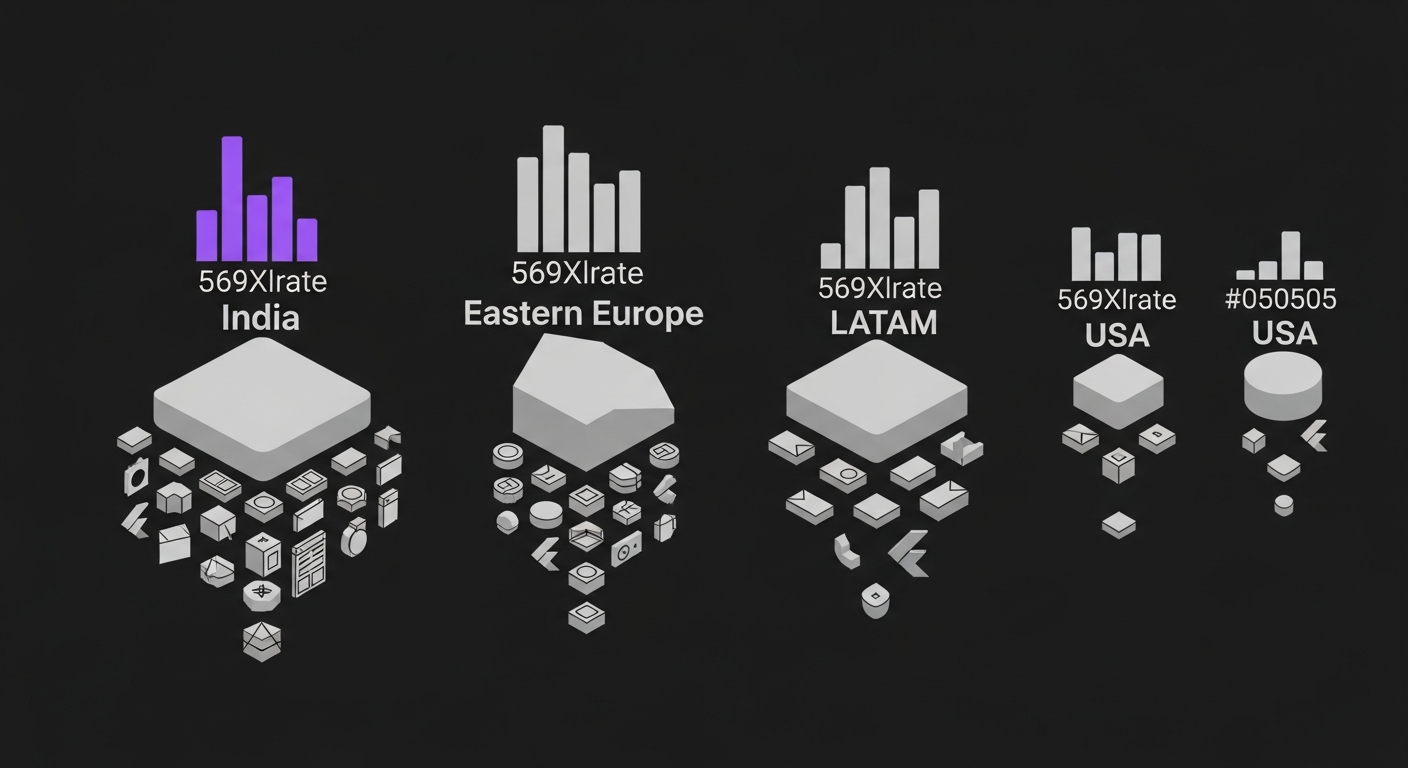
Flutter Developer Hourly Rates 2026: India vs US vs Eastern Europe vs LATAM
Honest 2026 comparison of Flutter developer hourly rates across India, USA, Eastern Europe, and LATAM. Real numbers from our hiring desk, not vendor marketing.
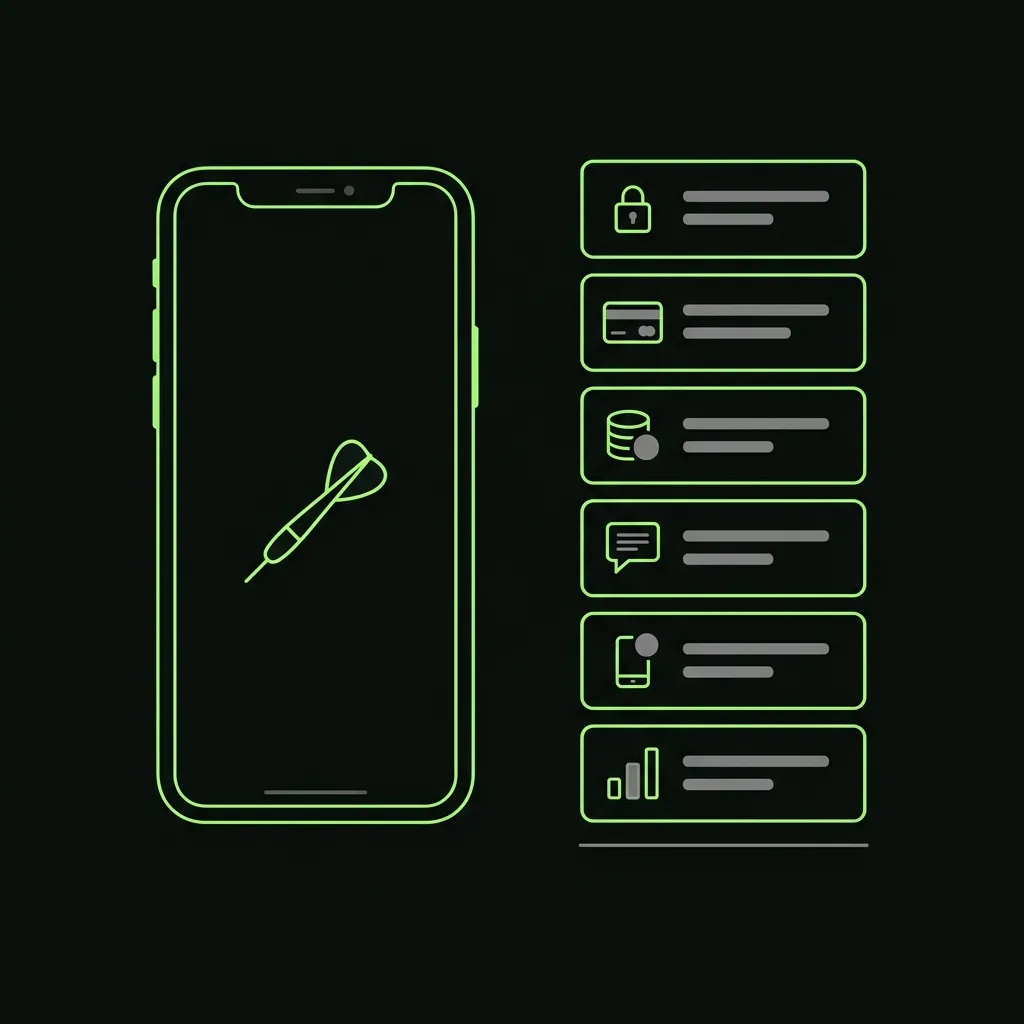
Flutter App Development Cost in 2026: Real Project Ranges
What a Flutter app actually costs in 2026: real USD ranges by project type, feature set, and team region. Includes per-feature pricing, India vs. US arbitrage math, and the hidden costs every quote omits.

25 Best Flutter Apps in Production (2026 Showcase)
25 real Flutter apps shipped by Google, BMW, Alibaba, Nubank, and others — with honest notes on which screens are actually Flutter and what technical choices made them work.
Hire vetted, AI-accelerated Flutter developers.
From $18/hr Junior to $60/hr Lead. 48-hour developer match. 30-day replacement guarantee.