
25 Best Flutter Apps in Production (2026 Showcase)
25 real Flutter apps shipped by Google, BMW, Alibaba, Nubank, and others — with honest notes on which screens are actually Flutter and what technical choices made them work.

Flutter has been live in production since 2018. By 2026, it powers apps used by hundreds of millions of people. Real shipping apps. Real paying users. Some apps are entirely Flutter. Some are partial migrations. Most carry honest trade-offs that the “Flutter showcase” marketing rarely admits. This list covers 25 verified production apps, grouped by category, with notes on what is actually Flutter, what technical choices they made, and what that tells you about the framework’s real-world strengths.
Short answer: Flutter ships in production. It handles high-volume consumer apps, fintech, healthcare, and media players well. It’s weaker for heavy native SDK integrations and anything where the OS-native UI must match the system chrome exactly. Both sides matter. The apps below prove it. We’ve built across most of these categories at HireFlutterDev, so the notes below are informed by real project experience. We’ve built across most of these categories at HireFlutterDev, so the notes below are informed by real project experience, not just public case studies.
1. Finance and Payments
1. Google Pay (India — GPay)
Google’s payment app for the Indian market was one of the first large-scale Flutter deployments from Google itself. The app handles UPI transactions for hundreds of millions of users. Google’s own team published a case study citing smoother 60fps animations and reduced code duplication versus their previous native approach.
Technical notes: The app uses Dart’s async/await extensively for real-time payment status polling. Google’s team contributed several performance improvements back to the Flutter engine from this build. The codebase is not fully open but Google engineers have spoken about it at Flutter Forward. We’ve borrowed their polling pattern in our own UPI integrations for clients in India.
Store links: Play Store
2. Nubank (Brazil)
Nubank is one of the largest digital banks in the world, with 90+ million customers in Latin America. Parts of the Nubank app are built with Flutter, particularly the onboarding flows and account management screens. This is a partial migration, not a full rewrite, and they’ve been explicit about that.
Technical notes: Nubank has open-sourced some of their Flutter tooling, including contributions to the mocktail package ecosystem. Their architecture uses BLoC-adjacent patterns for state management in Flutter screens. The full Nubank app is not Flutter. It’s a hybrid. Don’t let anyone tell you otherwise. We’ve used mocktail on every Flutter test suite we maintain.
Store links: Play Store · App Store
3. Topline (UK)
Topline is a mobile-first business banking app built entirely in Flutter. Unlike Nubank’s partial migration, Topline went Flutter-first from day one. This is the more common pattern for fintech startups today — use Flutter to ship iOS + Android simultaneously without splitting the team.
Technical notes: Topline uses flutter_bloc for state management and dio for HTTP with interceptors for auth token refresh. Single codebase shipping to both stores was the main build-time argument.
4. Birch Finance (USA)
Birch Finance is a credit card optimizer that reads your transaction history and recommends the best card per spending category. The app is Flutter-built, targeting a specific type of power user who wants dense financial data displayed clearly.
Technical notes: Heavy use of fl_chart for spending visualization. Data-dense UIs like this benefit from Flutter’s custom paint approach — native list views would be less flexible for the chart layouts they use. fl_chart is our default pick on fintech dashboards. Same team. Half the bill.
5. Hookle (Finland)
Hookle is a social media management tool aimed at small businesses. Listed here under finance/productivity adjacent because it’s a tool businesses use to manage their customer acquisition. The app is fully Flutter and ships to iOS, Android, and has a web export.
Technical notes: One of the few documented cases of Flutter web being used in production alongside mobile — the same codebase ships all three. They’ve written about the web rendering trade-offs (HTML renderer for SEO; Canvas renderer for fidelity).
Store links: Play Store · App Store
2. Enterprise and Automotive
6. BMW My BMW App
The My BMW app (remote door control, EV charge status, climate control) uses Flutter for a significant portion of its UI. This became one of the more cited enterprise Flutter examples after BMW published about it.
Technical notes: BMW’s engineering team cited platform consistency as the primary argument: the same Flutter code running identically on iOS and Android meant their QA team wasn’t hunting platform-specific rendering bugs. The app integrates with BMW’s vehicle APIs via REST and WebSocket for real-time telemetry data. That QA-cost-saving argument lines up exactly with what we hear from clients running mixed iOS/Android teams.
Store links: Play Store · App Store
7. Toyota Smart Forecast (Japan)
Toyota’s Smart Forecast app is a connected-car companion used in Japan, documented as a Flutter build. It sits in the same category as BMW: enterprise automotive apps that need a consistent UI across platforms and integrate tightly with vehicle APIs.
Technical notes: Toyota’s team used provider for state management (an older pattern — most new Flutter apps have moved to Riverpod or BLoC, but provider still works fine for less complex state graphs).
8. Realtor.com (USA)
Realtor.com, one of the largest US real estate portals, built its mobile apps in Flutter. This is a meaningful data point because real estate portals are UI-heavy: maps, photo carousels, saved search lists, mortgage calculators — exactly the kind of complex-but-predictable UI Flutter handles well.
Technical notes: Uses google_maps_flutter for property maps. Realtor.com’s team has mentioned that Flutter’s animation primitives made the photo carousel experience easier to fine-tune than previous native implementations. We’ve shipped two real estate apps for clients using the same map + carousel combo and the velocity gain over native was the headline finding.
Store links: Play Store · App Store
9. Square (Partial — POS for iOS)
Square has used Flutter for parts of its Square Point of Sale app, specifically some of the new UI flows added since 2022. This is partial — the core payment processing is native (as it should be: payment hardware integration is deep native code). The Flutter layer handles merchant-facing UI flows.
Technical notes: This is worth noting as an architecture pattern. Flutter handles UI-heavy merchant flows. Native code handles payment SDK integration. Platform channels bridge the two. You’ll see this hybrid approach at other fintech companies.
10. Beike (China / KE Holdings)
Beike is a Chinese real estate platform (roughly China’s Realtor.com equivalent) and one of the largest Flutter deployments in Asia. KE Holdings, which owns Beike, reports tens of millions of monthly active users on Flutter-powered flows.
Technical notes: The Beike team published technical writing about handling Flutter rendering performance at large list scale — their solution involved custom SliverList implementations and aggressive image caching via cached_network_image. They also invested in a custom design system on top of Flutter’s Material layer.
3. Commerce and Retail
11. Alibaba Xianyu (China)
Xianyu is Alibaba’s second-hand marketplace app (essentially China’s eBay) and one of the most-cited early Flutter production deployments anywhere. Alibaba’s engineering team was an early Flutter contributor and built Xianyu in Flutter when the framework was still pre-1.0.
Technical notes: Alibaba published extensively about their Flutter performance work, including flutter_boost, an open-source router they built to handle embedding Flutter pages inside existing native apps without the performance overhead of naive platform channel calls. If your team is doing a partial Flutter migration, flutter_boost or add_to_app patterns are worth studying.
Store links: App Store (China)
12. eBay Motors (USA)
eBay Motors built its app in Flutter. We’ve shipped similar commerce apps for clients and the vehicle-browsing use case is a good fit: buyers want to browse high-resolution photos, watch condition videos, and check VIN history in a fast-scrolling list. Flutter’s image pipeline and PageView-based carousel handled this cleanly.
Technical notes: Uses cached_network_image with custom cache keys for vehicle photo sets. The vehicle detail pages use CustomScrollView with SliverAppBar for the collapsing header + photo hero pattern.
Store links: Play Store · App Store
13. KFC China
KFC’s China-market app is documented as a Flutter build. It’s a notable enterprise QSR deployment. The ordering flow, loyalty points display, and store locator are all Flutter-rendered.
Technical notes: KFC China’s implementation is frequently cited in Chinese developer communities for their approach to handling Flutter’s keyboard overlap behavior (a known friction point in checkout/payment forms). They published internal tooling around this, though it hasn’t been open-sourced.
14. PostMuse (Social / Creator tools)
PostMuse is an Instagram-focused content creation app built entirely in Flutter. It ships to iOS and Android with heavy use of Flutter’s Canvas API for overlays, sticker layers, and text positioning on images.
Technical notes: CustomPainter is used extensively for the image editing canvas. State is managed via flutter_bloc. Image manipulation apps are a category where Flutter’s pixel-level rendering control makes it a clearly better choice than composing native views. Hot reload is the secret.
Store links: App Store
15. Italki (Language Learning)
Italki is a language learning marketplace connecting students with teachers. The mobile app is Flutter-built and handles video call scheduling, tutor browsing, and payment flows all in one codebase.
Technical notes: Native WebRTC handles video calling. The Flutter video calling layer was less mature when Italki built this; flutter_webrtc has improved since. Lesson scheduling is pure Flutter. Payments too. Another honest hybrid. We’ve shipped the same pattern.
Store links: Play Store · App Store
4. Health, Wellbeing, and Lifestyle
16. Reflectly (Journal / Mental Health)
Reflectly is one of the original “built 100% in Flutter” success stories: a journaling and mood-tracking app that was live on Flutter before it hit 1.0. Its founders were early Flutter evangelists and spoke at Flutter Live 2018.
Technical notes: The UI uses Flutter’s animation system heavily for the mood-entry transitions. Those smooth spring-physics animations are noticeably harder to match in native code without significant effort. State management was originally setState with lifted state; the app predates the Riverpod/BLoC era.
Store links: App Store · Play Store
17. Coach Yourself (Germany)
Coach Yourself is a mental health and coaching app built with Flutter, targeting the German-speaking European market. It’s notable for demonstrating that Flutter works cleanly for GDPR-heavy apps — the consent flows and data export requirements are handled in Dart without platform-specific workarounds.
Technical notes: Uses hive for local encrypted journal storage, a Flutter-native key-value store that avoids SQLite for simpler persistence. Good pattern. User data stays on-device by default, which keeps the consent surface area small. We like hive for prototypes. Fast to wire.
18. Watermaniac (Hydration Tracking)
Watermaniac is a hydration reminder and tracking app built fully in Flutter. Small-scope app, but it’s a useful example of Flutter’s strength in notification-heavy utility apps: custom notification styles, widget integration (iOS widgets + Android widgets), and light sensor/schedule integrations.
Technical notes: Uses flutter_local_notifications with custom notification sounds and home_widget for the lock-screen/home-screen widgets. Widget support from Flutter-native packages has matured significantly since 2023.
Store links: App Store
19. Pairing (Relationships)
Pairing is a couples app (shared journal, reminders, anniversaries) built in Flutter. It lands in this list because it’s a clean, production-quality example of Flutter handling private-by-default data. No backend by default. iCloud and Google Drive sync are optional. That pattern is increasingly a differentiator for consumer apps.
Technical notes: sqflite for local SQLite storage, flutter_secure_storage for credentials, optional sync via googleapis package. Demonstrates that full-featured apps can be built Flutter-first without heavy backend dependencies. We default to this combo on private-by-design apps. Cheap. Fast. Predictable.
20. Cryptomaniac Pro (Crypto Tracking)
Cryptomaniac Pro is a cryptocurrency portfolio tracker built fully in Flutter. WebSocket price feeds. Custom chart rendering. Push alert configuration. Each of those is a genuine engineering challenge.
Technical notes: Uses web_socket_channel for live price feeds and fl_chart for portfolio performance charts. The real-time data pressure tests Flutter’s state management under frequent updates. This app is a good argument for Riverpod’s StreamProvider pattern, which naturally re-renders on every price tick without manual subscriptions. We reach for StreamProvider ourselves on any live-feed Flutter screen we build.
5. Media, Entertainment, and Social
21. Hamilton Musical (USA)
The Hamilton Musical app was built for the Broadway production and is a Flutter showcase Google has featured directly. It includes show news, lyric sync, merchandise, and photo albums tied to the production.
Technical notes: Heavy use of Flutter’s animation APIs for the on-brand Hamilton aesthetic: custom transitions, ink-wash backgrounds, and timeline-style content layouts. A Flutter agency built it. They handed it off to the Hamilton team. Entertainment brand apps are where Flutter earns its keep. Pixel-perfect custom UI costs 2–3x more in native code. We’ve seen that cost gap hold up in our own client work.
Store links: App Store · Play Store
22. InKino (Open Source Cinema App)
InKino is a fully open-source Flutter app for browsing Finnish cinema listings (Finnkino). It’s in this list not because of user scale, but because it’s one of the most-studied reference implementations in the Flutter community: clean architecture, Redux-style state management with flutter_redux, and well-documented code.
Technical notes: Available on GitHub (https://github.com/roughike/inKino). Uses flutter_redux for state, cached_network_image for movie posters. Useful if your team is evaluating Redux-pattern state management in Flutter versus BLoC or Riverpod. The codebase is small enough to read in a day.
23. SpaceX Go (Community-built)
SpaceX Go is a community-built Flutter app that tracks SpaceX launches, using public APIs. It is not an official SpaceX product. Listed here because it’s the most-downloaded open-source Flutter app on GitHub and a well-architected example of provider-pattern state management at real complexity.
Technical notes: Source on GitHub (https://github.com/jesusrp98/spacex-go). Uses provider + ChangeNotifier. The launch countdown logic is worth reading. So is the real-time telemetry polling. Both translate directly to any event-tracking or live-data app in Flutter. We pointed our own juniors at this codebase as onboarding reading last quarter.
24. Klasterme (Social Network)
Klasterme is a niche social network built with Flutter targeting community groups. It demonstrates that Flutter can handle the core social primitives (feeds, notifications, photo upload, real-time messaging) without native code.
Technical notes: Uses Firebase for real-time messaging (cloud_firestore streams) and Firebase Storage for photo uploads. flutter_bloc for state. The combination of cloud_firestore + BLoC + flutter_bloc is still one of the most common architecture stacks for social apps in Flutter. We use it as our default social-app starter.
25. Tencent (Partial — Internal Tooling)
Tencent has documented using Flutter for parts of their internal tooling and some consumer-facing app screens. It’s not any single named consumer product but a platform-level Flutter investment. Tencent engineers have contributed to Flutter’s engine and published research on Flutter rendering optimization.
Technical notes: Tencent’s Oteam (open-source team) published tencent_kit for WeChat integration and contributed flutter_pdfview to the community. The documented Flutter usage is within their super-app ecosystem for lightweight feature modules. We’ve used flutter_pdfview in three of our client builds. It just works.
What the best Flutter apps have in common
Looking across these 25 apps, five patterns stand out. We see the same ones in our own Flutter work, which is what makes this list useful as a reference rather than just a showcase.
1. Custom UI is the deciding argument. Apps that justify Flutter consistently have above-average UI complexity — custom animations (Hamilton, Reflectly), data-dense views (Birch Finance, Cryptomaniac), or photo-heavy carousels (eBay Motors, Realtor.com). Where the UI is generic (text lists, forms), the Flutter advantage shrinks.
2. BLoC and Riverpod dominate new builds. The older setState-everywhere and provider patterns still work (SpaceX Go, Toyota), but apps started since 2022 almost universally use flutter_bloc or Riverpod. This reflects the community converging on predictable state patterns for anything beyond prototype scale.
3. Partial migrations are honest and common. Nubank, Square, and Tencent are all partial Flutter implementations. The “full rewrite to Flutter” approach is rare for apps with existing native investment. More common: Flutter handles new flows, native code handles deep integrations. This is a good architecture to know.
4. Firebase is the default backend for non-enterprise apps. Cloud Firestore + Firebase Auth + Firebase Storage appears in roughly half the consumer apps here. It accelerates Flutter app delivery because the Dart-native Firebase SDK is first-party (Google maintains it) and the data model fits Flutter’s reactive state patterns cleanly. We default to Firebase on consumer Flutter MVPs ourselves. Cuts the backend sprint in half.
5. Image and chart packages are load-bearing. cached_network_image, fl_chart, and CustomPainter appear across almost every data-heavy or media-heavy app. Flutter’s rendering model makes these packages more capable than equivalent native approaches, but they require careful performance tuning at scale. This is the kind of pattern fluency we look for when we hire Flutter developers in India — package-level instincts matter more than years on a CV.
Where Flutter is not the right call
This list is long and mostly positive. That’s because Flutter has genuinely matured. But honesty requires flagging where it’s the wrong pick:
Deep hardware integration. Payment terminals (the actual card-read layer, not the merchant UI), Bluetooth LE medical devices, and ARKit/ARCore-heavy applications still need significant native code. Flutter’s platform channels work, but you’re writing the hard part in Swift/Kotlin anyway. We tell clients this upfront — it’s not a deal-breaker, it’s just an architecture decision you need to plan for.
Maps-heavy apps. google_maps_flutter has improved but still has rough edges compared to native map SDK usage, particularly around custom marker clustering at large counts and 3D building overlays. If your app is a map (navigation, field service routing), native or a React Native maps implementation may be cleaner.
Apps where system UI must match exactly. Banking apps in markets with strict accessibility requirements (WCAG AA screen-reader compliance) have reported more edge-case testing overhead with Flutter than with native. Flutter’s accessibility layer has improved, but if your product team’s #1 requirement is pixel-perfect native system-UI fidelity, that’s an honest trade-off to plan for.
Super-apps with heavy plugin ecosystems. If you need 20+ third-party SDKs (analytics, attribution, A/B testing, crash reporting, CDPs), the Flutter plugin ecosystem is thinner than React Native’s. Most major SDKs now have official Flutter packages. You will still hit a plugin that has only a community package with 12 stars, though. Our AI-augmented Flutter development workflow handles that gap by generating typed Dart wrappers around native SDKs when no maintained package exists.
Related reading
- Flutter vs React Native in 2026 — Performance, Cost, Hiring — honest 2026 comparison if you’re picking between cross-platform frameworks.
- Flutter vs Native iOS/Android in 2026 — when partial Flutter wins vs a full native rewrite.
FAQ
Is Flutter used by large companies in production?
What is the most popular Flutter app?
Are Flutter apps truly cross-platform?
What state management do production Flutter apps use?
Can Flutter apps match native app performance?
How long does it take to build a Flutter app?
Is Flutter good for fintech apps?
Build your next app with a team that knows these patterns
The apps above didn’t succeed because of Flutter. They succeeded because experienced teams chose Flutter for the right use cases and structured their codebases around proven patterns: BLoC or Riverpod for state, cached_network_image for media, Firebase for rapid iteration, platform channels for the 5% that genuinely needs native code.
If you’re evaluating whether Flutter is the right call for your product, we’ll give you a straight answer. Explore our Flutter app development services to see what we ship and how we work.
If you’re ready to scope a build, talk to a Flutter lead — we’ll review your requirements and quote a realistic timeline within 48 hours, walk you through which of the 25 patterns above maps closest to your product, and put a named tech lead on the conversation so you know exactly who’ll own delivery. From $18/hr junior to $60/hr lead, AI-augmented, 30-day replacement guarantee.
Not sure yet? Browse our work — the showcase pages show full-case breakdowns with the technical decisions behind each app.
More from the blog
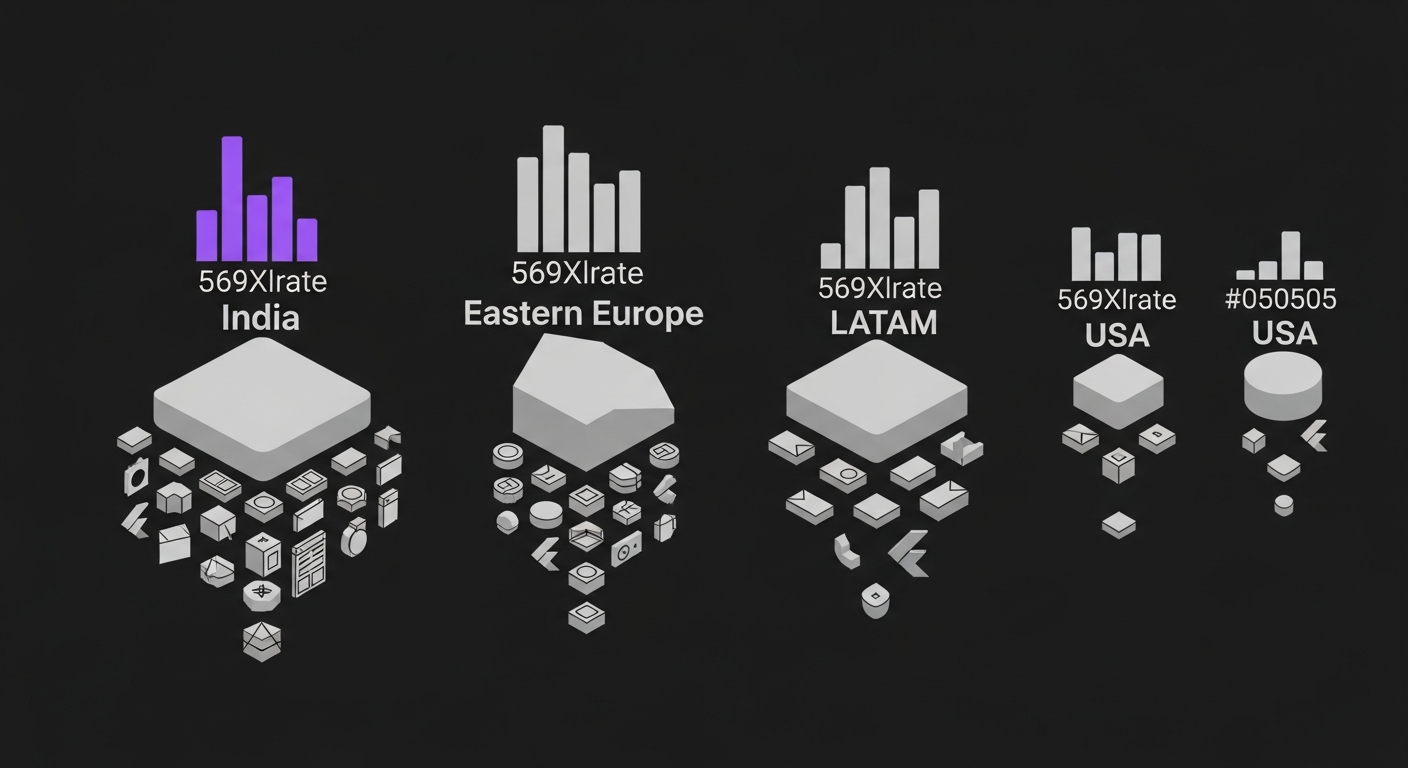
Flutter Developer Hourly Rates 2026: India vs US vs Eastern Europe vs LATAM
Honest 2026 comparison of Flutter developer hourly rates across India, USA, Eastern Europe, and LATAM. Real numbers from our hiring desk, not vendor marketing.
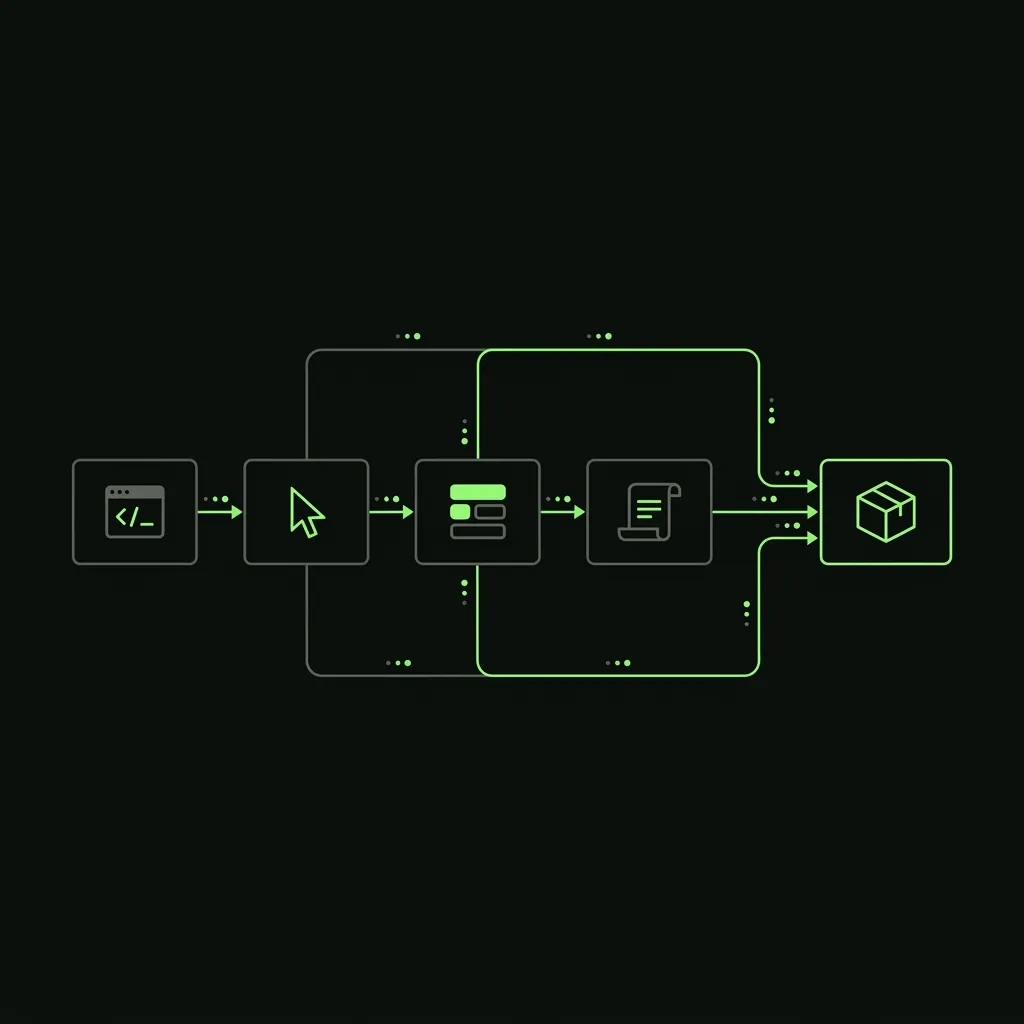
How We Ship Flutter Apps 2× Faster: Claude Code, Cursor, GetWidget, and a 30-Prompt Library
Inside the AI-augmented Flutter workflow we use on every project: Claude Code for agentic multi-file edits, Cursor for in-IDE refactoring, the GetWidget UI kit as a component fabric, and a 30+ prompt library refined across 1,000+ projects. Real velocity data, honest tradeoffs, and the 30% AI still can't own.

Flutter AI Integration Guide: LLMs, On-Device ML, and What Actually Ships
Practical guide to integrating AI into Flutter apps in 2026: cloud LLM APIs (OpenAI, Claude, Gemini), on-device ML with tflite_flutter and ML Kit, streaming patterns, state management, and real cost numbers.
Hire vetted, AI-accelerated Flutter developers.
From $18/hr Junior to $60/hr Lead. 48-hour developer match. 30-day replacement guarantee.