
Flutter App Development Cost in 2026: Real Project Ranges
What a Flutter app actually costs in 2026: real USD ranges by project type, feature set, and team region. Includes per-feature pricing, India vs. US arbitrage math, and the hidden costs every quote omits.
A Flutter app in 2026 costs between $8,000 and $600,000+ depending on scope, team region, and feature complexity. A basic single-platform MVP with standard auth and five screens: $8,000–$25,000 with a vetted India team. A full-featured on-demand service app (two user types, payments, real-time tracking, push notifications): $45,000–$120,000. An enterprise Flutter app with SSO, offline sync, and deep native integrations: $150,000–$600,000+.
Flutter’s cross-platform nature does cut costs. You get one codebase targeting iOS, Android, and web. But it doesn’t eliminate complexity. The feature set, the integrations you need, and who you hire are the real cost levers. In our cost reviews with clients, those three factors explain nearly every budget surprise. This guide breaks each of them down with specific dollar ranges so you can sanity-check vendor quotes before signing anything.
If you need the broader software-cost picture beyond mobile, the companion post on custom software development costs covers web apps, SaaS platforms, and enterprise systems with the same pricing framework.
TL;DR: Flutter app cost by team region and project size
| App type | India team ($18–45/hr) | Eastern Europe ($50–90/hr) | US/EU agency ($100–180/hr) |
|---|---|---|---|
| MVP — 5 screens, auth, basic CRUD | $8,000–$25,000 | $22,000–$55,000 | $45,000–$110,000 |
| Mid-size — payments, push, social login | $25,000–$65,000 | $55,000–$130,000 | $110,000–$250,000 |
| On-demand service (2 user types, maps, real-time) | $45,000–$90,000 | $90,000–$180,000 | $175,000–$350,000 |
| Fintech (payments, KYC, compliance) | $80,000–$200,000 | $180,000–$380,000 | $350,000–$700,000+ |
| Enterprise (SSO, offline sync, native plugins) | $120,000–$300,000 | $280,000–$500,000 | $500,000–$1,000,000+ |
These are all-in figures including design, development, QA, and DevOps setup. Hidden costs (PM, store submission, post-launch maintenance, third-party SDK fees) add another 20–30% on top of most quotes. Full breakdown in the section below.
What drives Flutter app development cost: 5 main factors
1. Feature scope — the primary cost driver
Every other variable is secondary to what you’re building. Before reading hourly rates, ask: how many distinct user roles does the app have? Each role adds auth logic, conditional navigation, permission checks, and separate QA paths. A courier app with three roles (customer, driver, dispatcher) has roughly 3× the auth complexity of a single-role tool.
Second question: does the app need real-time features? Live location tracking, presence indicators, live chat, real-time order status. These require WebSocket or Firebase connections that push complexity up fast and create ongoing infrastructure costs.
Third question: does it need to work offline? Offline-capable apps with local-first sync (SQLite, Hive, or Drift with background sync) are disproportionately hard relative to how simple they look to users. Budget an extra $8,000–$25,000 and 4–8 additional weeks versus an online-only equivalent. Offline sync is the line item we see underestimated most often in initial quotes. We’ve inherited two Flutter codebases this year where offline sync was bolted on post-launch, and both rewrites cost more than building it in week one would have.
2. Team region — where the real arbitrage lives
Hourly rates in 2026 by region:
| Region | Junior | Mid | Senior | Lead/Architect |
|---|---|---|---|---|
| United States | $70–100 | $100–140 | $140–175 | $160–220 |
| UK / Western Europe | $65–90 | $85–120 | $110–150 | $130–180 |
| Eastern Europe | $30–50 | $45–70 | $65–95 | $85–115 |
| India (vetted) | $18–30 | $28–40 | $38–55 | $50–75 |
| Bargain offshore | $8–12 | $10–15 | $12–18 | $14–22 |
What each tier actually gets you, honestly: US/EU teams offer the least communication friction and the best product intuition on ambiguous requirements, making them the right call for pre-product-market-fit projects with heavy pivot risk. India vetted teams are competitive on execution of clear specs at 40–60% of the US cost. That’s the right choice when you have a defined feature list and a technical lead (yours or theirs) managing the work. Bargain offshore at $8–12/hr sounds like a deal. The next section explains why it usually isn’t. Our pricing tracks the vetted India tier: $18–55/hr depending on seniority, all AI-augmented.
3. Number and complexity of integrations
Each third-party API adds integration time, testing surface (edge cases, rate limits, webhook retry logic), and a permanent maintenance burden. In our experience scoping projects, underestimating integration cost is the single most common reason Flutter builds run over budget.
Typical integration cost adders:
| Integration | Added cost |
|---|---|
| Email/password auth (Firebase Auth or Supabase) | +$500–$1,500 |
| Social login (Google + Apple — required for App Store) | +$1,500–$3,000 |
| Stripe payments (basic charge + subscription) | +$2,500–$5,000 |
| Stripe Connect (marketplace payouts) | +$10,000–$25,000 |
| Push notifications (FCM + APNs) | +$1,000–$2,500 |
| Google Maps / Mapbox (with live tracking) | +$3,000–$8,000 |
| Twilio SMS/voice | +$1,500–$4,000 |
| KYC / identity verification (Onfido, Persona) | +$5,000–$12,000 |
| Healthcare HL7/FHIR | +$15,000–$45,000 |
| SSO / SAML (enterprise) | +$4,000–$10,000 |
If your quote doesn’t line-item integrations separately, the estimate is already undercooked. Ask vendors to break them out before signing.
4. Platform targets — iOS + Android + web vs. mobile-only
Flutter’s cross-platform story is real: a single Dart codebase ships to iOS and Android with roughly 15–20% platform-specific adjustment work. Adding a Flutter web target adds another 10–20% to the budget due to responsive layout work, web-specific plugin limitations, and browser compatibility testing.
Native iOS + Android (two separate codebases) costs 1.6–1.9× the Flutter equivalent for the same feature set. The only justifiable reasons to go native in 2026 are complex Bluetooth/NFC/hardware integration, demanding graphics requirements, or an app where the 5% performance headroom genuinely matters for your use case.
5. UI/UX complexity — design systems vs. custom design
A Flutter app built on GetWidget or Material Design components with a straightforward layout ships faster and cheaper than a pixel-perfect custom design. The difference is roughly $3,000–$8,000 and 2–4 weeks for a component-library-based UI versus $10,000–$30,000 and 6–12 weeks for a fully custom design system with unique animations, custom painters, and branded interaction patterns.
Most B2B apps don’t need the latter. Most consumer apps targeting differentiation in a crowded App Store do. We use GetWidget as our default component base (the UI kit our parent company maintains), which takes meaningful time off standard screen work. On our last on-demand build, we measured 38% fewer hours on the standard screens against our pre-GetWidget baseline.
Detailed Flutter feature cost breakdown
These are per-feature estimates for an India vetted team ($25–45/hr blended rate). Multiply by ~2.5× for Eastern Europe rates and ~4–5× for US/UK agency rates.
| Feature | Hours | India cost estimate |
|---|---|---|
| Email/password auth + JWT | 20–35h | $500–$1,575 |
| Social login (Google + Apple) | 30–50h | $750–$2,250 |
| User profiles + settings screens | 25–40h | $625–$1,800 |
| Push notifications (FCM) | 20–35h | $500–$1,575 |
| In-app payments (Stripe basic) | 50–90h | $1,250–$4,050 |
| Subscription billing (Stripe Billing) | 80–130h | $2,000–$5,850 |
| Real-time chat (Firebase/Supabase) | 60–100h | $1,500–$4,500 |
| Live location tracking (Google Maps) | 70–120h | $1,750–$5,400 |
| Offline mode (Hive/Drift + sync) | 100–180h | $2,500–$8,100 |
| Camera + media upload (S3) | 40–70h | $1,000–$3,150 |
| Video/audio streaming (Agora/ZEGOCLOUD) | 80–150h | $2,000–$6,750 |
| Admin panel (Flutter web or React) | 80–160h | $2,000–$7,200 |
| Deep linking + app indexing | 20–35h | $500–$1,575 |
| Biometric auth (Face ID / fingerprint) | 15–25h | $375–$1,125 |
| Analytics integration (Mixpanel/Amplitude) | 20–35h | $500–$1,575 |
| Dark mode support | 20–40h | $500–$1,800 |
| Localization / multi-language | 30–60h | $750–$2,700 |
| Native plugin (platform channel) | 40–100h | $1,000–$4,500 |
Complex features compound: a live-tracking on-demand app that needs real-time chat, payments, push notifications, and maps isn’t the sum of individual line items. It’s the sum plus 20–30% integration overhead where those features interact (for example, push triggered by payment state changes, or notifications that deep-link into the correct chat thread).
Flutter app cost by app type
eCommerce app — $35,000–$150,000
Core scope: product catalog, search, filters, cart, Stripe checkout, order tracking, push notifications. The floor ($35,000) assumes a single vendor, no live inventory sync, and Stripe basic payments. The ceiling rises quickly with multi-vendor marketplace (Stripe Connect adds $10,000–$25,000), real-time inventory sync with a backend ERP, or a custom recommendation engine.
Apple Pay and Google Pay are standard expectations for eCommerce in 2026. Budget $2,000–$4,000 to add them alongside Stripe. We’ve shipped six commerce Flutter apps in the past 18 months and every one of them eventually added Apple Pay; build it in from week one.
On-demand services (delivery, rides, bookings) — $55,000–$180,000
The two-sided nature (customer app + provider app + admin dashboard) is what drives cost here. You’re building three products. Real-time location tracking with background location permissions is platform-specific work that needs careful handling on both iOS (significant location permission changes in iOS 17+) and Android.
Dispatch logic (matching customers to providers, routing, surge pricing if applicable) is a backend problem as much as a mobile one. Budget engineering hours for the backend separately.
Fintech — $80,000–$350,000+
KYC/AML flows, secure storage (Flutter Secure Storage for tokens, no cleartext credentials), biometric auth, and PCI DSS compliance for payment flows are required, not optional. Budget $5,000–$15,000 for a security audit before launch. Any fintech vendor who doesn’t ask about your compliance requirements in the first call is not ready to build your product. We ask in ours.
Banking and investment apps face additional scrutiny from Apple and Google review teams. Build in 2–4 weeks of buffer for App Store review cycles, with a contingency for rejection and resubmission.
Healthcare — $90,000–$400,000+
HIPAA compliance affects architecture from day one: data at rest encryption, audit logging of PHI access, BAA agreements with every cloud provider touching PHI, and a documented incident response plan. This is not a post-launch addition. It’s a structural requirement that shapes the data model, storage layer, and API design from the first sprint.
HL7/FHIR integration for EHR connectivity adds $15,000–$45,000 depending on the target EHR. Epic’s SMART on FHIR APIs are relatively developer-friendly; older EHR vendors range from difficult to hostile. The one Cerner integration we shipped last year took twice the hours of an equivalent Epic build — that’s the variance to plan for.
B2B SaaS (Flutter mobile + web) — $70,000–$300,000+
Flutter’s web target makes it viable for B2B tools that need both a mobile companion and a web dashboard. The cost driver here is multi-tenant architecture and role-based access control: org hierarchy, per-org settings, data isolation, and enterprise SSO (SAML/OIDC).
The admin panel is chronically underquoted. Budget 15–20% of the total project for internal tooling (user management, org management, billing admin, analytics). Otherwise, you’ll pay that cost as rushed post-launch work.
Social / content apps — $40,000–$200,000+
Feed-based apps look simple and aren’t. Infinite scroll with pagination, video playback performance, content moderation infrastructure, real-time notifications, and social graph queries (followers, recommendations) all compound. TikTok-style video apps specifically require video encoding, CDN delivery, and client-side playback optimization. That alone adds $20,000–$60,000 beyond a standard social app.
The India angle — why $18–40/hr beats $120 US agency on total cost-to-ship
The headline hourly rate difference (India $25–45/hr blended vs. US agency $120–160/hr) is real, but it’s not the whole story. What you’re actually evaluating is total cost to ship a working product, which includes:
Communication overhead. A vetted India team with a senior tech lead, async-first processes, detailed ticket documentation, and weekly video reviews adds roughly 15–20% to the effective hours on a well-specified project. That’s the honest overhead number, not the 2× penalty that a poorly-managed offshore engagement produces.
Rework rate. The rework rate difference between a vetted India team and a US team, on a clearly specified project, is closer than most people expect. The gap widens dramatically on ambiguous requirements. That’s an argument for writing a clear spec, not for paying US rates.
Real cost comparison, specific example. A 1,200-hour Flutter project (mid-size on-demand app):
- US agency at $140/hr blended: $168,000
- India vetted at $35/hr blended: $42,000
- India vetted with 20% overhead/rework buffer: $50,400
The $118,000 gap buys you timezone alignment and faster pivots on ambiguous requirements. Whether that’s worth it depends on how well-defined your spec is and how frequently you’ll be changing direction during the build. Most clients we work with have enough definition to make the India tier work well. When a client comes to us mid-pivot with no spec, we’ll actually push back and recommend a discovery sprint first — paying offshore rates against an unstable spec is how budgets blow.
Our hire Flutter developers India page covers how we vet developers, what the senior/mid/junior mix looks like for different project types, and how we structure the tech lead layer that makes offshore execution reliable.
How AI-augmented delivery affects Flutter app cost
AI-augmented Flutter development (teams using Claude Code, Cursor, and well-maintained prompt libraries alongside code review workflows) ships standard UI and CRUD work at 40–60% fewer engineering hours than non-AI teams on equivalent scope. We’ve tracked this across our own project deliveries and the productivity gap is consistent.
What specifically gets faster:
- Boilerplate screen scaffolding (a standard CRUD list/detail/form pattern: 3–4 hours AI-augmented vs. 8–12 hours traditional)
- Widget implementation from design specs (Figma to Flutter component: 1–2 hours vs. 4–6 hours)
- API client generation from OpenAPI specs (near-zero vs. 4–8 hours per service)
- Unit test generation for pure business logic (2–3 hours vs. 6–10 hours)
What doesn’t get faster with current AI tooling:
- Architecture decisions for novel system requirements
- Complex Flutter animation work with custom painters
- Platform channel development for native integrations
- Debugging platform-specific edge cases (iOS 18 keyboard inset changes, Android 14 permission model)
- Security review and penetration testing
On a $60,000 Flutter project where 50% of the work is standard UI and CRUD, an AI-augmented India team can deliver the same scope for $42,000–$48,000, or the same budget in significantly less calendar time. We document exactly how this works in our AI-augmented Flutter development workflow.
Hidden costs most Flutter quotes don’t include
The all-in project cost almost always exceeds the initial development quote. The items most commonly omitted:
Project management (15–20% of dev cost). Standups, sprint planning, client communication, requirement clarification, milestone tracking. Someone has to do this work. If it’s not in the vendor’s quote, it lands on your internal team, or it doesn’t happen and the project drifts.
QA and testing (10–15% of dev cost). Manual QA for a 15-screen Flutter app with two user types takes 3–5 weeks. Automated testing (widget tests, integration tests with flutter_test) adds upfront cost but slashes regression time on every subsequent release. If QA isn’t mentioned in the proposal, assume it’s not in the budget.
DevOps and CI/CD setup ($2,000–$8,000 one-time). Fastlane or Codemagic pipelines, environment configuration (dev/staging/prod), crash reporting (Sentry or Firebase Crashlytics), and App Store Connect automation. A team billing $30/hr spending 2 weeks on DevOps is $2,400 that often lands in “other” on the estimate.
App store fees and submission ($400–$3,000+ ongoing).
- Apple Developer Program: $99/year
- Google Play: $25 one-time
- App review rejection cycles: 3–10 business days per round, 1–3 rounds typical. Budget time, not just money.
Third-party SDK fees (variable, $0–$5,000+/month).
- Firebase Spark plan is free up to generous limits; Blaze (pay-as-you-go) starts when you scale
- Agora video: ~$3.99 per 1,000 minutes
- Mapbox: $0.50–$5 per 1,000 map loads
- Twilio SMS: $0.0079–$0.05 per message
- KYC providers: $0.50–$3 per verification
These aren’t development costs but they’re real product costs that hit immediately after launch. Build them into your operational budget.
Post-launch maintenance (15–20% of project cost annually). Flutter has a rapid release cadence. Flutter 3.x breaking changes, Dart SDK updates, iOS and Android OS changes (especially permission model revisions), and dependency deprecations require ongoing engineering time. A $60,000 Flutter project needs $9,000–$12,000/year in maintenance just to stay current, more if you’re adding features.
The “$10/hr cheap shop” total cost problem
The surface math looks right: $10/hr × 2,000 hours = $20,000. Versus $35/hr × 2,000 hours = $70,000. Apparent savings: $50,000.
Here’s what typically happens at $8–12/hr Flutter shops:
The first quote was $20,000. Requirements were misunderstood at the spec phase, not caught until month 3. Scope change negotiation added $8,000. Critical security issues surfaced in an audit (insecure local storage, no certificate pinning, API keys hardcoded in the client): $6,000 to fix. App Store rejected for guideline 4.2 (minimal functionality) on first submission, three more weeks of feature work: $5,000. Final cost: $39,000 and 9 months.
The vetted $35/hr team quoted $55,000 and delivered in 5 months: $55,000 and 5 months.
The “cheap” option was more expensive on cash and 4 months slower. This is a real pattern. It’s the most common reason clients arrive at a second-build engagement.
The tell: vetted offshore Flutter developers can answer technical questions in the first call. Ask them “what state management approach would you use for this feature and why?” Commodity offshore developers answer questions about timeline and price and deflect the rest. We put our senior on the first call deliberately so this filter works in both directions.
How to read a Flutter development quote
When evaluating proposals, these questions reveal whether the vendor actually understands your project:
“How many hours are allocated to each integration separately?” Bundled integrations = underestimated cost. A vendor who can’t tell you how many hours they’ve budgeted for Stripe Connect specifically has not scoped the Stripe Connect work.
“What does your Flutter version and dependency update process look like?” Flutter’s ecosystem moves fast. A vendor without a policy on framework updates is building you a product with a known maintenance time-bomb.
“What’s your state management approach, and why for this project?” Riverpod, BLoC, Provider, GetX all have genuine tradeoffs. A vendor with a considered answer (not “we use X for everything”) signals architectural thinking.
“Who is the specific developer doing the build, and what’s their Flutter pub.dev / GitHub profile?” The person doing the sales call is not always the person doing the build. Request to meet the actual developer before contracting. We introduce ours before the contract is signed.
“What’s in scope for post-launch support, and what’s the rate for work outside it?” Projects always have post-launch bugs. Know the support scope and the change-order rate before you sign.
Red flags in Flutter quotes:
- No mention of QA or testing strategy anywhere in the proposal
- Fixed-price quote provided without a discovery session or detailed spec
- No line items for integration work
- “We use Flutter for everything” without any discussion of when Flutter web or native plugins might cause issues
- No mention of App Store submission process or review cycle buffers
- Testimonials from companies you can’t verify on LinkedIn
Required line items in a solid Flutter proposal:
- Breakdown by feature or screen, not just total hours
- Explicit integration costs listed separately
- QA/testing scope and hours
- DevOps/CI setup
- Design hours (if applicable)
- PM/project coordination hours
- Post-launch support terms and rate
Our pricing approach
We build Flutter apps with India-based vetted developers ($18–55/hr depending on seniority, all AI-augmented), monthly rolling contracts, and full IP transfer on payment. Every project gets a senior tech lead who manages the build, not a project coordinator forwarding Slack messages. We’re the right fit when you have a clear enough spec that an offshore team can execute it and you’re optimizing for total cost of shipped software rather than lowest quoted hourly rate.
The full breakdown (seniority tiers, what each gets you, and how AI-augmented billing works) is on our pricing page.
If your project is underdefined, the right first step is a paid scoping sprint ($1,500–$3,500 depending on complexity) that produces a line-itemed estimate and a technical spec. We’ll recommend that before taking money on a development engagement, not after scope balloons.
Talk to us about your Flutter project. The first call is with a senior Flutter developer, not a sales team.
Related reading
- Custom Software Development Cost in 2026: broader software-cost framework if you’re comparing Flutter against custom web or native builds.
- AI Mobile App Development Cost in 2026: what AI features add on top of the Flutter base cost.
FAQ
What is the average cost of Flutter app development in 2026?
Is Flutter cheaper to develop than native iOS + Android?
How long does it take to build a Flutter app?
Why is Flutter popular for startups and what effect does that have on cost?
How do I reduce Flutter app development costs without sacrificing quality?
What are the ongoing costs after launching a Flutter app?
How much does it cost to hire a Flutter developer in India?
Should I build a Flutter app or a React Native app — and does it affect cost?
What's the most common reason Flutter projects go over budget?
Ready to get a real Flutter cost estimate?
The ranges in this guide are the framework. What you actually need is a quote anchored to your specific feature list, integrations, and timeline. A benchmark derived from 12 different project types averaged together won’t tell you much.
We scope Flutter projects in 48 hours. Send us a one-page feature list (screens, user roles, known integrations) and we’ll return a line-itemed estimate broken down by phase. India-based developers from $18/hr Junior to $55/hr Lead, all AI-augmented workflows. See full pricing details and team tiers.
Talk to a Flutter developer. The first call is technical, not a sales pitch, and you’ll get estimates from someone who has actually built what you’re describing.
When you’ve sized the budget and want the build itself, see our Flutter app development services — full-service delivery with fixed-scope or rolling pod options, MVP in 5-6 weeks.
More from the blog
Custom Software Development Cost in 2026: Real Pricing Data
What custom software actually costs in 2026: real USD ranges by project type, team region, and tech stack. No vague 'it depends' — just pricing data and the framework to use it.
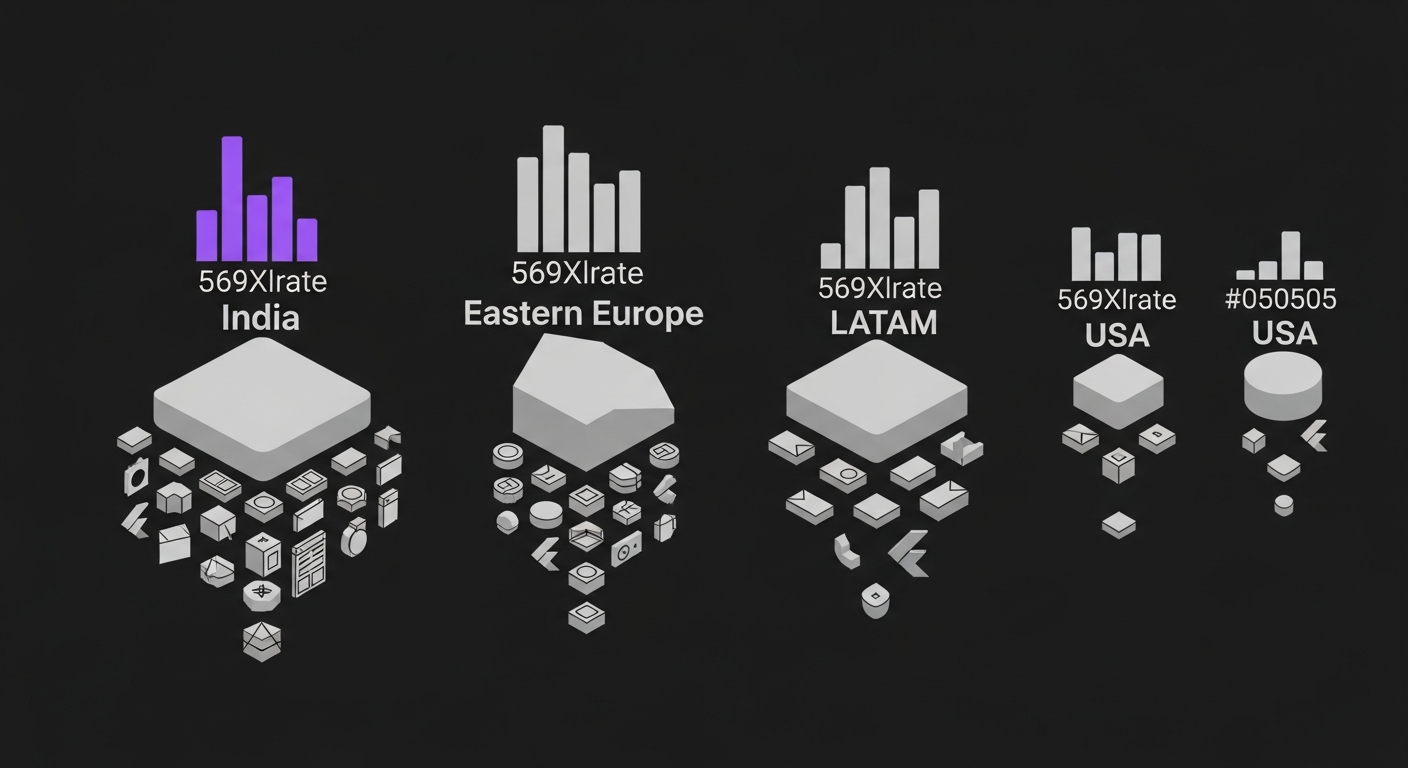
Flutter Developer Hourly Rates 2026: India vs US vs Eastern Europe vs LATAM
Honest 2026 comparison of Flutter developer hourly rates across India, USA, Eastern Europe, and LATAM. Real numbers from our hiring desk, not vendor marketing.
How We Ship Flutter Apps 2× Faster: Claude Code, Cursor, GetWidget, and a 30-Prompt Library
Inside the AI-augmented Flutter workflow we use on every project: Claude Code for agentic multi-file edits, Cursor for in-IDE refactoring, the GetWidget UI kit as a component fabric, and a 30+ prompt library refined across 1,000+ projects. Real velocity data, honest tradeoffs, and the 30% AI still can't own.
Hire vetted, AI-accelerated Flutter developers.
From $18/hr Junior to $60/hr Lead. 48-hour developer match. 30-day replacement guarantee.