
Custom Software Development Cost in 2026: Real Pricing Data
What custom software actually costs in 2026: real USD ranges by project type, team region, and tech stack. No vague 'it depends' — just pricing data and the framework to use it.
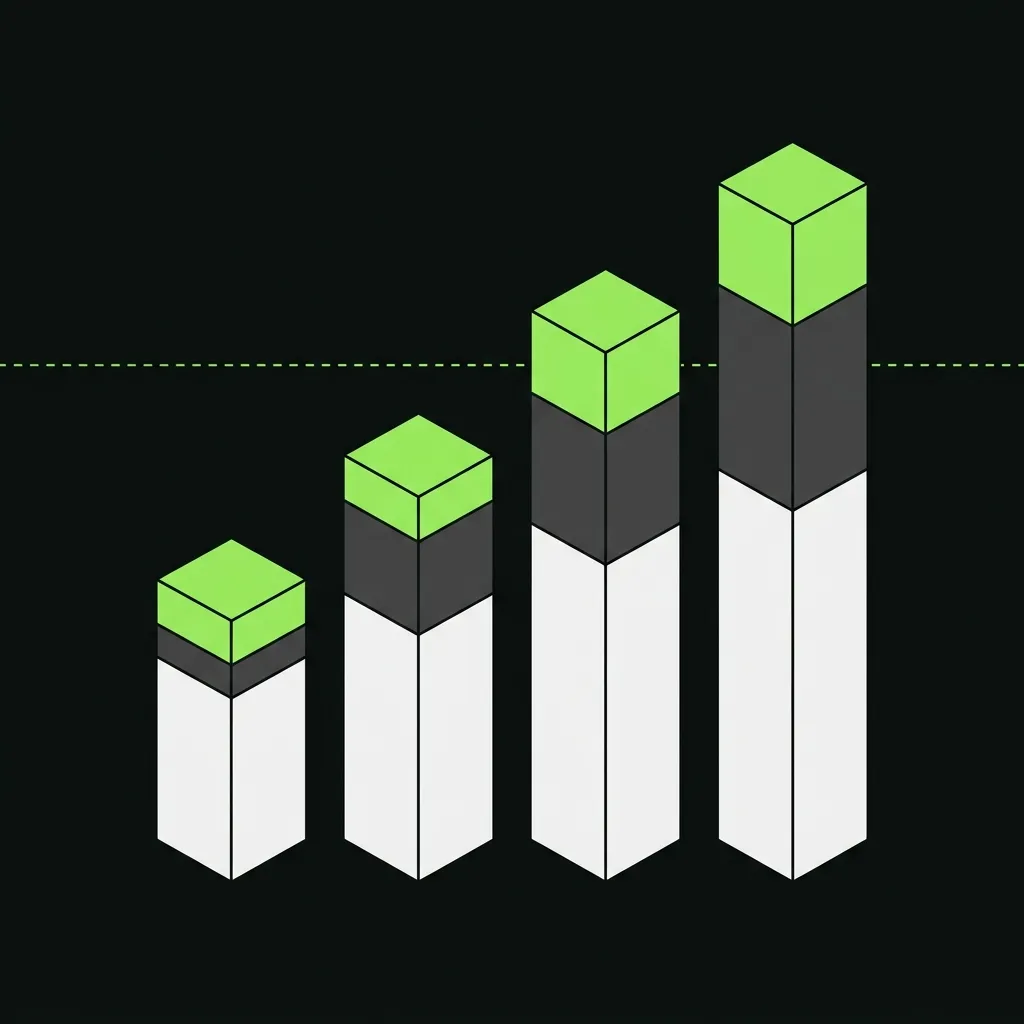
Custom software development in 2026 costs somewhere between $15,000 and $750,000+ depending on what you’re building, who you hire, and where they’re based. That’s not a vague range. It maps to real project types. A validated MVP web app with five screens: $15,000–$40,000 with an offshore team. A B2B SaaS platform with multi-tenant billing and role-based access: $120,000–$350,000. A regulated fintech or healthcare product: $250,000–$750,000+, and that’s before compliance audits.
If you’re collecting vendor quotes right now, the number one thing that will help you is understanding which of those tiers your project falls into before you talk to anyone. In our experience, quotes without that context are noise.
TL;DR — Cost ranges by project type and team tier
| Project type | Offshore team ($18–60/hr) | Mid-market ($80–130/hr) | US/UK premium ($120–180/hr) |
|---|---|---|---|
| MVP web app (5–10 screens) | $15,000–$40,000 | $40,000–$100,000 | $80,000–$180,000 |
| MVP mobile app (iOS + Android) | $20,000–$60,000 | $60,000–$140,000 | $100,000–$220,000 |
| B2B SaaS (multi-tenant, billing) | $80,000–$200,000 | $200,000–$450,000 | $350,000–$700,000+ |
| Two-sided marketplace | $100,000–$250,000 | $250,000–$500,000 | $400,000–$800,000+ |
| Fintech (payments, compliance) | $150,000–$400,000 | $400,000–$700,000 | $600,000–$1,200,000+ |
| Healthcare (HIPAA, HL7, EHR) | $200,000–$500,000 | $500,000–$900,000 | $800,000–$1,500,000+ |
These are all-in figures including design, development, QA, and DevOps setup. Engineering hours only. Hidden costs (covered below) add another 20–35% on top of most quotes you’ll receive.
What “custom software development” actually means in 2026
The phrase covers a lot of ground, and vendors use it to mean different things. Before comparing quotes, you need to know which category you’re actually in.
Custom software means a product built from scratch for your specific requirements: your database schema, your business logic, your user flows. Nothing reused except open-source libraries and frameworks. You own the IP. You can modify anything.
SaaS platform licensing means paying $X/month for software someone else built. No IP ownership. Limited customization. Works until your requirements outgrow the platform’s opinionated structure. For standard use cases (project management, CRM, HR) this is almost always the right call. If you’re evaluating custom software, you’ve presumably already ruled this out.
No-code / low-code tools (Bubble, Webflow, Retool, Glide) close the gap further for specific use cases. A Webflow marketing site with Airtable backend can handle a surprising amount of product surface. The ceiling hits when you need custom business logic, high-volume data processing, complex integrations with internal systems, or a regulated environment. At that ceiling, custom development is cheaper over a three-year horizon than fighting your no-code platform’s limitations with ever-more-complex workarounds.
Template-based development (buying a SaaS template and customizing it) sits between no-code and fully custom. It’s faster and cheaper for standard use cases but creates technical debt at the same ceiling point.
If you’re reading a custom software cost guide in 2026, you’re probably past all three of those options already. The relevant question is which type of custom project and which team structure.
The 5 main cost drivers
1. Scope — the only one that actually matters first
Every other cost driver is secondary to scope. A fintech MVP with 8 screens costs the same order-of-magnitude as a B2B SaaS with 8 screens if the underlying complexity is the same. What drives complexity:
- Number of distinct user roles (each adds auth logic, conditional UI, permission systems)
- Number of third-party integrations (payment gateways, accounting APIs, logistics providers; each adds 1–3 weeks)
- Data model complexity (a simple CRUD app vs. a system with soft deletes, audit trails, multi-tenancy, and version history)
- Real-time requirements (presence, live updates, notifications push complexity up fast)
- Offline capability (mobile apps that need to sync are disproportionately hard relative to their apparent user-facing simplicity)
The single best thing you can do before requesting quotes: write a one-page feature list with explicit out-of-scope items. “We need Stripe payments” is worth half a day of scoping. “We need Stripe Connect for marketplace payouts with multi-currency and dispute handling” is 2–4 weeks of engineering, priced differently by every vendor. We ask every prospect to send that one-pager before our first call — the conversations that follow are 3× more useful than the ones that don’t.
2. Team region — where the real arbitrage is
This is the most quantifiable variable. Hourly rates by region in 2026:
| Region | Junior ($) | Mid ($) | Senior ($) | Lead/Architect ($) |
|---|---|---|---|---|
| United States | $60–90 | $90–130 | $130–160 | $150–200 |
| United Kingdom | £55–75 | £75–110 | £100–140 | £130–180 |
| Western Europe | €50–75 | €70–110 | €90–130 | €110–160 |
| Eastern Europe | $30–50 | $45–70 | $60–90 | $80–110 |
| India (vetted) | $18–30 | $28–45 | $40–60 | $55–80 |
| Bargain offshore | $8–12 | $10–15 | $12–20 | $15–25 |
What each tier actually gets you — honestly:
US/UK/Western Europe ($90–180/hr): Senior-dominant teams, minimal communication friction, aligned timezone, fastest iteration on ambiguous requirements. Right choice when: your product is early-stage with heavy pivot risk, your internal team needs to pair closely with the dev team daily, or regulatory requirements demand locally-based contractors.
Eastern Europe ($45–90/hr): Strong technical depth (heavy CS education culture), partial timezone overlap with US, good English. The gap between Eastern Europe and India has narrowed in 2026 on technical quality for the types of engineers in the vetted market. Right choice when you want nearshore quality economics without going fully offshore.
India vetted ($18–60/hr): The word “vetted” is doing real work here. The top quartile of Indian developers, screened by actual technical tests rather than CVs, are competitive with mid-level US developers on execution tasks. The gap shows on product intuition, ambiguous requirement handling, and architecture decisions for novel systems. Right choice when: you have a clear spec, a strong technical lead (yours or theirs) managing the work, and you’re not relying on the developer to define what to build.
Bargain offshore ($8–15/hr): The math only works on the surface. More on this below.
3. Tech stack
Stack affects cost through two mechanisms: talent availability and library maturity.
Flutter + Dart for mobile: mid-range talent is abundant (250,000+ active Flutter developers in India alone as of 2026), excellent cross-platform coverage, strong UI kit ecosystem (including GetWidget). AI-augmented Flutter teams can cut delivery time by 40–60% on standard UI work versus non-AI teams. We track this on our own production projects and the numbers hold.
React / Next.js for web: largest developer pool globally, most mature SaaS tooling ecosystem, easiest to hire for. Default choice unless you have a specific reason not to.
React Native for mobile: similar talent pool, slightly more expensive to hire senior-level than Flutter in the Indian market in 2026.
Python (Django/FastAPI) for backend: strong for data-heavy, ML-adjacent products. Good talent availability.
Node.js (Express/Nest) for backend: widest pool, easiest to find commodity talent, highest variance in code quality at the junior level.
Go / Rust for performance-critical backend: significantly higher hourly rates, smaller talent pool, justified only when you have genuine performance requirements. We’ve talked two clients out of Rust in the past year — the perceived performance need didn’t survive a back-of-envelope load model.
Stack choice alone can shift your quote by 20–40%. A fintech MVP in Node + React Native will quote higher than the same in Flutter + Node because senior React Native devs in offshore markets command slightly higher rates and the native payment SDK integrations are more complex.
4. Timeline
Compressing timelines costs money, and the relationship is not linear. Adding a second developer to halve the time rarely works because of coordination overhead (Conway’s Law, Amdahl’s Law, real-world project experience). What actually happens when you rush:
- Parallel work requires more architecture upfront (good thing, but adds 2–3 weeks to planning)
- More developers means more code review cycles, more merge conflicts, more integration points
- QA work doesn’t parallelize well — you can’t have five testers writing test plans simultaneously in week one
A 4-month project given 2-month budget will cost 1.5–1.8× the 4-month rate, not 2×. If you’re told the rushed version costs exactly 2× the calendar-time version, that’s an honest answer. If it costs less than 1.5×, someone is planning to cut corners on testing.
5. Integrations
Every third-party integration adds cost in three places: initial integration time (1 day to 3 weeks depending on API quality), testing surface (each integration needs edge-case testing for rate limits, error states, and webhook retries), and ongoing maintenance because third-party APIs change and someone has to absorb those changes.
Common integration cost adders in 2026:
| Integration | Typical added cost |
|---|---|
| Stripe payments (basic) | +$1,500–$4,000 |
| Stripe Connect (marketplace payouts) | +$8,000–$20,000 |
| Twilio SMS/voice | +$1,000–$3,000 |
| SendGrid / email automation | +$800–$2,000 |
| Salesforce CRM sync | +$5,000–$15,000 |
| QuickBooks / Xero accounting | +$4,000–$12,000 |
| Healthcare HL7/FHIR | +$15,000–$40,000 |
| OAuth SSO (Google/Apple) | +$1,000–$2,500 |
If your quote doesn’t itemize integration costs separately, ask. Vendors often bundle them into story-point estimates in ways that obscure scope inflation.
Cost by project type — real 2026 ranges
MVP web app ($15,000–$180,000)
The most variable category. A “web app” can mean a five-screen CRUD tool with Postgres backend, or a real-time collaboration platform with complex state. The qualifying questions we ask first: does it need real-time features? How many user roles? Does it need a mobile companion app?
At the $15,000–$40,000 end: a single-role, no-real-time, no-payments MVP with 5–8 screens. Feasible with an offshore team in 10–14 weeks.
At the $80,000+ end: multi-role, payments, email automation, admin panel, analytics dashboard. Calendar time: 4–6 months. This is the bracket where most of our quarterly engagements land — we’d estimate 40% of our 2025 pipeline.
MVP mobile app ($20,000–$220,000)
Cross-platform (Flutter or React Native) is standard in 2026. Native iOS + Android only makes sense for: complex hardware integrations (Bluetooth, NFC, specialized sensors), apps where the 5% edge-case performance difference matters, or products with massive user bases where the native-specific optimization ROI is provable.
Budget for both platforms in your estimate regardless. Cross-platform frameworks have closed the gap enough that “we’ll do iOS first and add Android later” usually means rewriting 20–30% of the codebase to handle platform-specific differences. Do it together from week one.
B2B SaaS ($80,000–$700,000+)
The distinguishing features: multi-tenant architecture (one database schema serving multiple orgs cleanly), subscription billing (Stripe Billing is standard but non-trivial to implement correctly), role-based access across org hierarchy, and an admin panel that your internal team will actually use.
The admin panel alone is routinely underquoted. Vendors building the user-facing product treat the admin as an afterthought. Plan for 15–20% of total project budget for admin and operations tooling, or pay that cost post-launch as tech debt. Our standard SaaS quote line-items admin separately because we’d rather argue the number upfront than rebuild it in month nine.
Two-sided marketplace ($100,000–$800,000+)
The hardest product category to scope — not because of technical complexity per se, but because of edge cases. Who owns the transaction if both parties dispute? How are refunds handled? What’s the matching algorithm? How is trust scored?
Legal and product ambiguity in marketplaces tends to surface as expensive late-stage scope changes. Budget a 25–30% contingency buffer for marketplaces. Any vendor who quotes a marketplace without asking these questions during discovery is not ready to build one.
Fintech ($150,000–$1,200,000+)
Payments, lending, insurance, and investment products carry regulatory, compliance, and security requirements that dwarf typical app complexity. PCI DSS, SOC 2, state money transmitter licenses, KYC/AML flows: none of these are optional and none of them are cheap.
A fintech MVP in 2026 without compliance work is a liability, not a product. Budget for at least one compliance consultant alongside the development team. That cost ($15,000–$50,000+ depending on scope) is not optional and not something we let clients skip. We’ve walked away from two fintech engagements in 2025 where the client wouldn’t budget compliance — that’s a fight we’d rather lose at the proposal stage than mid-build.
Healthcare ($200,000–$1,500,000+)
HIPAA compliance is table stakes. If a vendor quotes a healthcare product without asking about HIPAA, PHI handling, BAA requirements, and audit logging in their discovery questions, walk away.
HL7/FHIR integration for EHR connectivity (required for most clinical workflows in the US) adds $15,000–$80,000+ depending on the EHR vendor and the depth of integration. Epic’s APIs are better than most. Smaller EHRs range from annoying to actively hostile.
Which team structure is right for your project?
The AI workflow effect on cost
This is the single biggest shift in software development economics between 2023 and 2026.
AI-augmented development teams, using tools like Claude Code, Cursor, and GitHub Copilot with well-maintained prompt libraries and code review workflows, ship standard UI and CRUD work at 40–60% fewer engineering hours than non-AI teams on equivalent scope. This is not marketing math. We track it on our own projects by comparing actual delivery timelines across equivalent scopes.
The caveat: AI tools don’t reduce the time spent on:
- Architecture decisions and system design (still requires senior human judgment)
- Complex business logic with unusual edge cases
- Integration debugging when a third-party API behaves unexpectedly
- Security review and penetration testing
- Compliance work
What this means for your budget: an AI-augmented team quoting $60,000 for a project that a non-AI team quotes at $100,000 is plausible. The AI team isn’t cutting corners. They’re doing the same amount of shipped work in fewer calendar hours. Ask vendors directly: are you using AI in your development workflow? If yes, how? The answer tells you a lot about their operational maturity.
We’ve written in detail about our AI-augmented Flutter development workflow, including what actually ships faster versus what still requires senior human time.
Hidden costs most quotes don’t include
The all-in project cost almost always exceeds the initial quote. Here’s what typically gets omitted:
Project management (15–20% of development cost). Someone has to run standups, write specs, handle client communication, manage timelines, and make product decisions. If the quote is pure development hours, PM costs will land on your internal team. That’s fine if you have a full-time product manager, but expensive if you don’t.
Quality assurance (10–15% of development cost). Manual QA for a 10-screen app takes 2–4 weeks. Automated test suites add upfront cost but reduce regression testing time on every future release. Quotes that don’t mention QA assume someone will test manually for free. That someone is usually you.
DevOps and infrastructure (5–15% of development cost). Setting up AWS/GCP/Azure, CI/CD pipelines, monitoring (Datadog, Sentry), database backups, SSL certificates, and production hardening costs real time. An overseas dev team billing at $30/hr spending 3 weeks on DevOps is $3,600, often buried in a lump-sum estimate.
App store submission and review (variable, $1,000–$3,000+). Apple and Google review take time, and rejections happen. Apple’s $99/year developer account is trivial; the time cost of rejection cycles and resubmission is not.
Post-launch maintenance (10–20% of project cost per year). Dependencies change. iOS/Android OS updates break things. Stripe deprecates API versions. Budget 10–15% of your build cost annually for maintenance. If you’re not budgeting this, you’re planning to let the product decay. Our standard handover includes a 12-month maintenance proposal alongside the final invoice — clients sign roughly 70% of them.
Legal (variable, $2,000–$30,000+). Terms of service, privacy policy, data processing agreements, IP assignment. None of these are optional. For healthcare and fintech, add compliance audits on top.
How to read a vendor estimate
When you receive a proposal, these are the questions that reveal whether the vendor actually understands your project:
“How many story points / sprints / hours are allocated to integrations?” If integrations are bundled rather than line-itemed, the estimate is already undercooked.
“What’s the assumption about the number of revision cycles?” Most fixed-price quotes assume one or two rounds of UI changes. Real projects have five or six. Ask what the change order rate is after the included rounds.
“What does your QA process look like, and is it in this quote?” Manual QA, automated testing coverage targets, accessibility testing, performance testing. If none of these are mentioned, they’re not in the budget.
“Who is the actual person doing the work, and can I talk to them before contracting?” Bait-and-switch is common at agencies: a senior developer does the sales call; a junior or mid-level does the build. Request to meet the specific developers before signing.
“What happens if you miss a milestone?” The answer to this question tells you whether the vendor has shipped projects before or only sold them.
Red flags to walk away from:
- Refusing to provide a line-itemed estimate (“we work in sprints, so we can’t give you a fixed price”)
- Providing a fixed price without any discovery call
- No mention of QA, DevOps, or post-launch maintenance anywhere in the proposal
- Testimonials only from companies you can’t verify exist
- No contract clause specifying IP ownership and transfer on payment
The “$10/hr cheap shop” trap
The math appears to work: $10/hr × 2,000 hours = $20,000 versus $50/hr × 2,000 hours = $100,000. You save $80,000.
Here’s what actually happens:
At $10–15/hr, you’re hiring developers who are either very junior (the talent hasn’t been filtered for quality yet), or experienced developers who’ve been filtered out of vetted markets for reasons you don’t know yet. There are exceptions, but finding them requires the same technical judgment you’re trying to outsource.
The realistic scenario at the low end: the first quote was $25,000. The actual shipped product required $40,000 due to scope changes driven by misunderstood requirements. It took 8 months instead of 4. At month 6, you hired a second firm to audit the codebase and fix critical security issues ($8,000). Total: $48,000 and 8 months.
A vetted $40/hr team quoting $60,000 and delivering in 5 months costs $60,000 and 5 months.
The cheap shop was more expensive. That’s not a hypothetical. It’s the pattern we see from clients who come to us after a first failed build.
The tell: vetted offshore developers answer technical questions in the first call. Commodity offshore developers answer sales questions in the first call.
Our pricing approach
Our model is tiered: $18–60/hr depending on seniority (Junior through Lead/Architect), all AI-augmented, monthly rolling contracts, full IP transfer on payment. No long lock-ins, no bait-and-switch on who builds your product. We’re a good fit when you have a clear enough spec that an offshore team can execute it, you want a technical lead (ours or yours) managing the work, and you’re optimizing for total cost of shipped software rather than lowest quoted hourly rate.
See the full breakdown, including what each tier actually gets you in 2026, on our pricing page.
If your project is underdefined, the right first step is a paid discovery sprint ($2,500–$5,000 depending on scope), not a fixed-price development quote. We tell clients that before taking their money, not after.
Related reading
- Flutter App Development Cost in 2026 — Real Project Ranges — Flutter-specific cost ranges with per-feature pricing.
- AI Mobile App Development Cost in 2026 — what AI features actually add to a mobile-app budget.
FAQ
Is custom software expensive?
How much does it cost to build software for a small business?
How much does it cost to build custom enterprise-level software?
Why is custom software more expensive than licensing existing software?
What actually affects custom software development pricing the most?
What's the real cost difference between offshore and US development?
How do AI-augmented development teams affect the total cost?
Ready to get a real number?
The ranges above are starting points. What you actually need is a quote anchored to your specific requirements, not a generic estimate that covers 12 different project types in one number.
We scope projects in 48 hours. Send us a one-page brief — feature list, rough user roles, known integrations — and we’ll return a line-itemed estimate broken down by phase. Rates from $18/hr Junior to $60/hr Lead/Architect, full pricing details here.
Talk to a developer — no sales team, no discovery call to schedule a discovery call. You get a technical lead on the first call.
If you’ve sized the budget and want a Flutter-stack build specifically, see our Flutter app development services — end-to-end discovery + build + launch + 30-day post-launch support.
More from the blog
Flutter App Development Cost in 2026: Real Project Ranges
What a Flutter app actually costs in 2026: real USD ranges by project type, feature set, and team region. Includes per-feature pricing, India vs. US arbitrage math, and the hidden costs every quote omits.

AI Mobile App Development Cost in 2026: Real Numbers, Real Tradeoffs
What AI features actually cost to build into a mobile app in 2026: LLM API integration, on-device ML, RAG pipelines, and the ongoing token costs most quotes skip. Real USD ranges, not ranges that mean nothing.
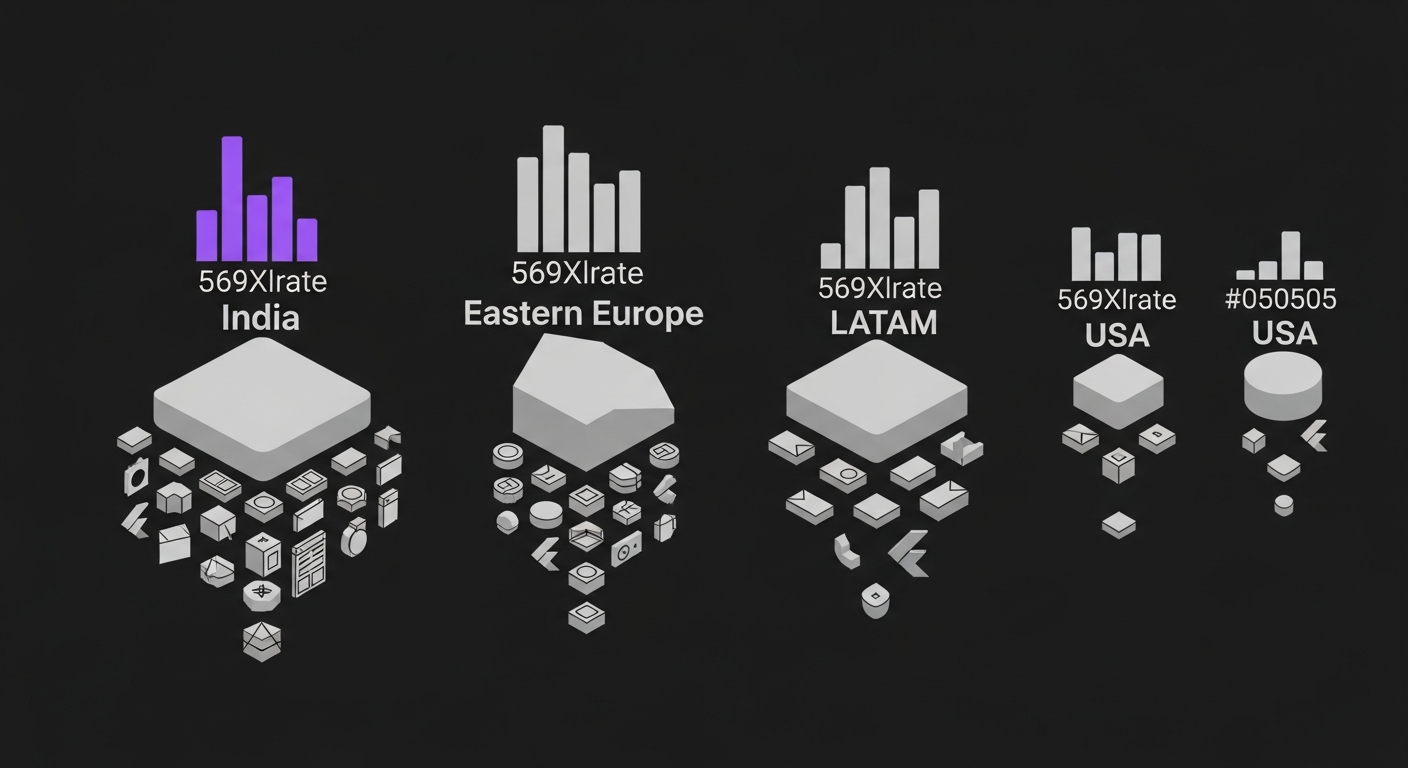
Flutter Developer Hourly Rates 2026: India vs US vs Eastern Europe vs LATAM
Honest 2026 comparison of Flutter developer hourly rates across India, USA, Eastern Europe, and LATAM. Real numbers from our hiring desk, not vendor marketing.
Hire vetted, AI-accelerated Flutter developers.
From $18/hr Junior to $60/hr Lead. 48-hour developer match. 30-day replacement guarantee.