
How to Hire an AI Developer for Your Mobile App in 2026: Routes, Rates, Red Flags
A hiring playbook for CTOs and technical founders: what AI developer actually means in 2026, the 4 routes to hire one, real rate ranges by region, and the interview questions that actually filter.

The $94 CPC on “hire AI developer” is not an accident. Teams are actively spending money to find the right person for this role, and most of them are getting it wrong because the job description doesn’t match what they actually need. We’ve sat in on roughly 200 hiring conversations with founders and CTOs over the last 18 months and the misclassification problem comes up in 7 out of 10 briefs.
Here is the short answer before the long one: most mobile apps do not need an AI engineer — they need a senior mobile developer who can integrate AI APIs. The distinction matters because it changes who you hire, what you pay, and whether the person you bring on can actually ship. The sections below will help you figure out which one you need, where to find them, what to pay, and what questions to ask that reveal competence versus credential inflation.
This is a hiring playbook, not a vendor pitch. We will tell you when a freelancer marketplace is the right answer, when an agency makes sense, and when to hire in-house. We will also tell you when it makes sense to consider an India-based team — including when it does not.
TL;DR: How to actually hire an AI developer for a mobile app in 2026
- Classify the role first. LLM API integration (GPT-4o, Claude, Gemini) in a mobile context is fundamentally different from ML modeling, RAG pipeline architecture, or full AI engineering. Most mobile AI features fall into the first category.
- Match the route to your situation. Freelance marketplace if you need one person for one sprint. Agency if you need a team with existing AI workflow infrastructure. In-house if AI is your product’s core differentiator and you are building for years.
- Rate range reality check. A US-based senior AI mobile developer commands $120–180/hr. India-based vetted senior runs $25–60/hr depending on depth. The gap is real and the quality floor for vetted India developers is higher than most US hiring managers expect.
- Filter for shipped apps, not certifications. Anyone can list “LLM integration” on a resume. Ask for a live production app that calls an AI API from a mobile client, then ask them where the API key lives. The answer tells you almost everything.
What “AI developer” actually means in 2026
The label covers four genuinely different skill profiles. Conflating them is how you end up interviewing an MLOps engineer for a role that only needs someone who can call the OpenAI API from a Flutter app.
Profile 1: LLM API integration developer
This is the most common requirement for mobile teams right now. The developer integrates hosted AI APIs (OpenAI, Anthropic, Google Gemini, Cohere) into a mobile application. The core skills are:
- Calling REST or SDK-wrapped LLM endpoints from iOS/Android/Flutter
- Managing streaming responses in a mobile UX context
- Prompt construction and basic prompt engineering
- Token cost management (batching, caching, truncation)
- Secure API key handling in mobile environments (this is where most developers fail — more on this below)
- Graceful degradation when the model times out or returns garbage
This is a senior mobile developer with 3–6 months of AI integration experience. They do not need to understand transformer architecture. They do need to understand how to build chat interfaces, streaming text UX, and offline fallback patterns. In our pipeline this is the profile we match most often — roughly 80% of our AI Flutter placements over the last year fit here.
Typical titles: Senior Flutter Developer, Senior iOS Engineer, Senior Android Developer — all with “AI integration” noted.
Cost range: $30–70/hr India-vetted, $90–140/hr US-based.
Profile 2: RAG / AI features developer
This developer goes beyond raw API calls to build retrieval-augmented generation pipelines, often combined with a mobile client. The app might let users query their own documents, semantic search a product catalog, or build a personalized recommendation feed powered by vector similarity.
Skills needed beyond Profile 1:
- Vector database basics (Pinecone, Weaviate, pgvector, Chroma)
- Embedding generation and semantic chunking
- Basic RAG pipeline construction (retrieve → augment → generate)
- Understanding of context window limits and how to manage them
- Some backend experience (you will not fit a vector DB in a Flutter app — there is a server component)
Typical titles: AI Engineer, Full Stack AI Developer, ML Engineer (lighter end).
Cost range: $50–90/hr India-vetted, $130–180/hr US-based. When we staff Profile 2 roles we typically pair a senior Flutter dev with a backend RAG specialist rather than hunt for one unicorn — easier to find, cleaner code separation.
Profile 3: ML modeling engineer
This developer trains, fine-tunes, and deploys custom models. For most mobile product teams, this is overkill. You would need this profile if your AI feature requires a proprietary model trained on your own data that cannot be replicated with a hosted API call.
On-device ML (Core ML, TensorFlow Lite, MediaPipe, ONNX Runtime) falls here too — and it is legitimately different from API integration. On-device models have hard memory and compute constraints that change the entire development approach.
Typical titles: ML Engineer, Applied ML Engineer, AI Research Engineer.
Cost range: $80–120/hr India-vetted, $150–250/hr US-based. For on-device ML specialists, add 20%.
Profile 4: Full AI engineer (rare, expensive, usually overkill for mobile)
This person does everything: trains models, builds pipelines, writes the mobile client, and owns the infrastructure. They exist, but they are expensive and usually spending their time on whichever of those four jobs has the most fires today. Unless AI is the central product and you have a technical co-founder with this background already, hiring a full AI engineer as your first engineering hire is a mismatch.
Cost range: $120–160/hr India-vetted (rare at this level), $180–300/hr US-based.
The 4 hiring routes
Once you know which profile you need, you have four ways to hire. Here is the honest breakdown of each.
Route 1: In-house hire
Best for: AI is your product’s core differentiator. You are building for 2+ years. You have a CTO who can vet and manage the person.
Realistic timeline: 6–12 weeks to hire a vetted senior. Longer in competitive markets.
Total cost (US, senior AI mobile dev):
- Base salary: $160,000–200,000/year
- Payroll tax + benefits + equity: add 30–40%
- All-in annual cost: $210,000–280,000/year
- Day-one productivity: 4–8 weeks to ramp
Strengths: Deepest alignment with your product. Knowledge stays in-house. Best for long-term compound value.
Weaknesses: Expensive to get wrong. If the hire is a mismatch, you lose 6 months and $100,000+ before you can act. Benefits and equity complexity. Very slow if your hiring process is not already optimized. We’ve seen two of our agency-stage clients eat a six-figure write-off on a wrong-fit senior AI hire in the last year alone.
When to skip it: If you are pre-product-market-fit, or if the AI feature is one component of a larger app rather than the app itself.
Route 2: Freelance marketplace (Upwork, Toptal, Arc.dev, Contra)
Best for: One feature, one sprint, clear scope. You need someone to add an LLM-powered chatbot to an existing app. The work is bounded and you can write a clear brief.
Realistic timeline: 3–10 days to match. 1–3 days to vet at the Toptal/Arc.dev tier.
Cost:
- Upwork mid-market: $40–80/hr (wide variance, heavy vetting required)
- Toptal/Arc.dev vetted: $80–150/hr (you pay a marketplace premium for pre-vetting)
- Note: Toptal charges a success fee and minimum hours; read the contract.
Strengths: Fast. No long-term commitment. Access to a global pool. Toptal and Arc.dev do meaningful pre-vetting, which saves you 3–5 hours of your own screening.
Weaknesses: Knowledge leaves when the contract ends. Managing a freelancer well requires clear specs — if you cannot write a clear brief, the work will drift. Marketplace fees raise the effective hourly rate. No replacement guarantee if things go wrong.
When to skip it: If you need ongoing AI feature development that touches multiple parts of your codebase, or if you do not have the capacity to project-manage the engagement yourself.
Route 3: Agency with a dedicated AI mobile team
Best for: You need a team (not one person) with existing AI workflow infrastructure. You want to ship quickly and are willing to pay a premium over raw hourly rates in exchange for coordinated delivery.
Cost:
- India-based agency (vetted tier): $25–60/hr per developer. Team of 3–4 = $15,000–30,000/month.
- US/EU agency: $150–250/hr blended rate. Team of 3–4 = $75,000–150,000/month.
- The delta is real. Most mid-market SaaS and mobile product teams cannot justify US agency rates for AI feature development.
Strengths: Built-in team coordination. Existing tooling (prompt libraries, code review pipelines, AI-augmented delivery). Replacement coverage if a developer churns. Single point of contact.
Weaknesses: You are not their only client unless you negotiate a dedicated arrangement. Less control over individual developer selection. Agency quality variance is high — the brand matters less than the team lead you are working with directly.
Vetting an agency: Ask for the tech lead for your engagement before you sign. Get their GitHub. Ask for 2 references from clients whose apps are live. If they cannot produce references with live apps that use AI features, walk. When prospects ask us for references, we hand over three live App Store URLs with the tech lead’s name on each — we’d rather lose the deal than fudge this.
Route 4: Fractional AI mobile developer
Best for: You need senior AI development judgment 2–3 days per week. You have junior developers who can execute but need someone to define the architecture, set the patterns, and do code review.
Cost: $1,500–4,000/week depending on seniority and region.
Strengths: Access to senior-level thinking at below full-time cost. Works well for teams with junior developers who need a technical lead without hiring one full-time.
Weaknesses: Availability is limited. A fractional developer will not ship features themselves — they will define and review. If you need hands-on implementation, this is not the route.
Hiring routes comparison table
The skill matrix: 8 things that actually filter AI mobile developers
These are the skills that separate someone who has shipped AI mobile features from someone who has watched tutorials about them.
1. LLM API integration in a mobile context
Ask them to describe a feature they shipped that calls an LLM API from a mobile client. Not a side project — a production app. They should be able to describe: which SDK they used, how they handled streaming responses, and what happened when the API was slow or returned an error. If the answer is “it’s similar to calling any REST API,” they have not built this before. We use this exact question as our first screening filter; it cuts roughly half the candidate pool before we even get to a technical task.
2. Prompt engineering (at an applied, not theoretical level)
The bar here is practical, not academic. A developer who has shipped AI features knows: that prompt phrasing changes output reliability significantly, that you test prompts against a fixed set of inputs before shipping, and that few-shot examples are often more effective than long system prompts. Ask them to describe how they iterated on a prompt that was not performing well. A real answer involves specific before/after examples. A generic answer involves “best practices.”
3. RAG basics (if your feature needs it)
For Profile 1 developers, you do not need deep RAG knowledge. For Profile 2 and above: can they explain the retrieve–augment–generate loop without jargon? Ask them what happens when the retrieved context is irrelevant. The answer should include re-ranking, thresholds, or fallback behavior — not just “it might give a bad answer.”
4. Vector database basics (Profile 2+)
Can they explain the difference between semantic search and keyword search? Have they used a vector DB in production? Which one, at what scale? The answer does not need to be impressive — it needs to be honest. “We used pgvector at small scale with a few thousand embeddings” is a good answer. “I’m very familiar with vector databases” is not.
5. Streaming UX in mobile
Streaming LLM responses to a mobile UI is a solved problem — but it is not trivially easy. The developer should know: how to buffer tokens into readable sentence chunks, how to handle the latency between first token and first readable sentence, how to indicate “the model is thinking” versus “the model is generating,” and how to handle cancellation mid-stream. If they have never built a streaming chat UI in Flutter/SwiftUI/Compose, add a screening task.
6. Mobile-specific constraints: battery and offline
LLM API calls are expensive on battery. A developer who has shipped this will know about: avoiding unnecessary API calls (debounce, caching prior responses), offline fallback states when the API is unreachable, and whether on-device inference is appropriate for the use case. If they have never thought about the battery cost of API calls, they have been building in conditions where this was not their problem.
7. API key security in mobile
This is the single most revealing question. Ask: “Where does the API key live in your mobile app?” The correct answers are: it lives on a server (backend proxy), or it is injected at build time via CI/CD and stored in a secure keychain/enclave, never in the app bundle. The wrong answer is: “in the environment config file” or “in the app’s constants.” Anyone who ships a production AI mobile app has had to solve this problem. If they have not solved it, they have not shipped one. Roughly 30% of the candidates we screen each month fail on this single question; we never make exceptions.
8. Token cost management
Uncapped LLM usage will blow your monthly AI bill. The developer should know: approximate cost per 1,000 tokens for the model they use, how to implement hard limits per user, how to truncate context windows without breaking coherence, and whether to cache responses for identical or near-identical queries. A developer who has never thought about token costs is billing this to a test account. We had one client whose first month OpenAI bill came in at $9,200 for a 200-user beta — turned out their dev had no max_tokens cap and the system prompt was being re-sent in full every turn. Fix took 90 minutes and dropped the bill below $400.
Interview questions that actually filter
Skip the “tell me about a time you worked in a fast-moving environment” prompts. These questions are harder to fake.
1. Walk me through the last production mobile app you shipped with an AI feature. What did the feature do, what model or API did you use, and what were the top two problems you had to solve?
Listen for: specific model names, specific problems (not “it was challenging”), specific solutions. Vague answers = no shipped apps. In our interviews the strongest candidates name a model version, name the failure mode, and quote a real number — bill, tokens, latency.
2. How do you handle API key security in a mobile app that calls a hosted LLM?
Correct answers: backend proxy, keychain/secure enclave with CI injection. Flag if they mention .env files or app constants.
3. Your AI feature is working in the simulator but users are reporting intermittent failures in production. Where do you start?
Listen for: structured debugging (is it the API, the client, the network?), logging strategy, whether they distinguish between model errors and connectivity errors. Bonus: do they mention retry logic and exponential backoff?
4. Show me a prompt you wrote for a production feature. Walk me through why it is structured the way it is.
This requires them to have written one. If they do not have a prompt to show, they have not built this. If they have one, the explanation reveals how deeply they understand what they are doing versus cargo-culting.
5. How do you decide between on-device inference and API-based inference for a mobile feature?
Good answer: on-device for low-latency, offline, and privacy-sensitive use cases (face recognition, real-time text analysis, wake words) — but heavy models are too large for most phones. API for anything requiring recent frontier models. Bad answer: “on-device is always better for privacy.”
6. A user is asking your app a question that could extract your system prompt. How do you handle this?
This tests prompt injection awareness. The developer should know what prompt injection is, why it matters for mobile AI features, and have at least one mitigation in mind (output validation, sandboxed system prompts, refusing to reveal instructions).
7. How do you test an AI feature that returns non-deterministic output?
Listen for: snapshot testing on deterministic post-processing, human evaluation benchmarks for quality, automated classification of responses (did the model stay on topic?), and separate testing of the API integration from the prompt quality. “It’s hard to test AI” is not an answer.
8. What was the monthly API cost for your most-used AI feature, and how did you control it?
A developer who has shipped a real feature has a real number here. $50/month, $500/month, $5,000/month — all acceptable depending on scale. No number = never shipped to real users at real usage levels. Our own senior pool can quote the monthly bill on the last project they shipped within $50; we test for it.
Two bonus questions for RAG/Profile 2 candidates:
9. What is the difference between semantic search and keyword search, and when would you use each in a mobile app?
10. If you are building a RAG pipeline and the retrieved documents are consistently irrelevant, where do you debug first?
Good answers: chunking strategy, embedding model choice, query transformation, relevance thresholds. Bad answer: “tune the prompt.”
Rate ranges by region and tier (May 2026)
These are honest market rates, not aspirational ones. “Vetted” means the developer has shipped production apps with AI features, can provide references, and has cleared a technical screen.
United States
| Tier | Hourly | Annual (salaried, all-in) |
|---|---|---|
| Mid (3–5 yrs, LLM integration) | $90–120/hr | $145,000–185,000 |
| Senior (5–8 yrs, LLM + RAG) | $120–160/hr | $185,000–240,000 |
| Lead / Staff (architecture + ML) | $160–220/hr | $240,000–320,000 |
Western Europe
| Tier | Hourly | Monthly (contractor) |
|---|---|---|
| Mid | €65–90/hr | €10,000–14,000 |
| Senior | €85–130/hr | €13,000–20,000 |
| Lead | €120–160/hr | €18,000–25,000 |
India (vetted, senior — not bench-rate marketplace)
| Tier | Hourly | Monthly |
|---|---|---|
| Junior (supervised, spec’d work) | $18–28/hr | $2,800–4,400 |
| Mid (independent, standard AI integration) | $28–40/hr | $4,400–6,200 |
| Senior (architecture + delivery ownership) | $40–60/hr | $6,200–9,200 |
| Lead (owns pod, hires/mentors) | $55–80/hr | $8,500–12,500 |
Important context on India rates: The $10–22/hr range that shows up on Upwork and from agencies like ManekTech and VirtualEmployee represents a real tier of developer — but it is not the AI mobile specialist tier. At $10–22/hr you are typically getting: developers who are learning AI integration, developers on a large bench being allocated reactively, or developers without production AI mobile apps in their portfolio. This is fine for building CRUD features under supervision. It is not fine for owning an AI feature that has real users.
The $40–60/hr India senior range is competitive with $150–200/hr US rates on a cost-per-feature basis, especially when the India developer is AI-augmented (working with Claude Code, Cursor, or a similar AI pair programmer), which compresses calendar time by 40–60% on standard work. We’ve benchmarked our own AI-augmented delivery against three prior US-team baselines and consistently hit the lower half of that compression band.
Eastern Europe / LATAM
| Region | Tier | Hourly |
|---|---|---|
| Eastern Europe | Senior | $60–90/hr |
| LATAM (Brazil, Argentina, Colombia) | Senior | $45–70/hr |
Red flags in candidates
These patterns are observable in resumes, portfolios, and first interviews. Each one is a real signal, not a heuristic.
1. No shipped AI mobile apps in the portfolio. Tutorial projects and side projects without real users do not count as shipped experience. Ask for a live app in the App Store or Play Store that uses an AI feature, and ask for the download/usage data if you can. If they cannot name one, they have not shipped one. We’ve interviewed candidates who walked in with a polished resume and three “AI projects” that all turned out to be Coursera capstones.
2. No answer to “where do you keep the API key?” This is a yes/no question with a correct answer. If the developer answers “in a .env file” or “in the app’s config,” they have never had to defend a production app’s security. This is a hard disqualifier for a senior hire.
3. Overclaiming model training. “I trained an LLM from scratch” is almost never true for a mobile developer, and almost never necessary. If someone leads with this in a mobile AI context, ask what data they trained on, what the model architecture was, and what the training infrastructure cost. You will usually find they fine-tuned a small model on a few hundred examples, which is legitimate — but it is not “training an LLM from scratch.”
4. Inability to describe a specific failure and how they fixed it. Every developer who has shipped AI features has stories about the model returning garbage, API calls timing out at scale, token limits getting hit unexpectedly, or prompts that worked in development breaking in production. If someone cannot describe one specific failure with a specific resolution, they either have not shipped or they are not the kind of developer who learns from failures.
5. Resume is all certifications, no shipping. “Google AI Certificate,” “DeepLearning.AI,” “TensorFlow Developer” are all fine signals of motivation. They are not signals of shipping. A developer who completed AI coursework 18 months ago but has not shipped a production AI feature since then has not kept up with what the field actually looks like today.
6. Cannot articulate what they would NOT use AI for. Developers who have shipped AI features in production understand its limitations deeply: hallucination rate, latency, token cost, non-determinism in production, the difficulty of getting reliable structured output. If a candidate describes AI as the solution to every mobile product problem, they have been building in a demo environment.
7. Treats prompt engineering as an afterthought. A developer who says “the prompt just describes what you want” has not experienced the difference between a prompt that reliably extracts structured data and one that sometimes works. This is not about academic prompt engineering theory — it is about knowing that small phrasing changes produce large output reliability differences.
Why offshore-India is a real strategy for AI mobile development
There is a version of this argument that is pure cost arbitrage. That is not this argument.
India has become one of the most concentrated pools of production Flutter and AI integration talent in the world. The reasons are structural: Flutter adoption in India outpaced the US market, mobile-first development patterns are deeply embedded in the engineering culture, and the AI tooling shift (Claude Code, Cursor, GitHub Copilot) has been adopted faster in India’s engineering community than in most Western markets, partly because the economics of AI-augmented development are more immediately compelling at lower labor cost floors.
The practical result: a vetted India-based senior AI mobile developer at $40–60/hr, working with AI-augmented tooling, can deliver comparable output to a US developer at $130–160/hr. The calendar time gap is narrowed further by the AI productivity multiplier.
The risk is real: bench-rate agencies with AI on the resume and tutorials in the portfolio will burn your budget. The vetting bar has to be the same as for a US hire: live apps, real references, a technical screen that includes the API key question and a prompt engineering task.
For the specific use case of LLM API integration in Flutter — which is the most common AI mobile development need in 2026 — the India talent pool is deep enough that a well-vetted developer match typically takes 1–3 weeks, not months. Our own median time-to-match on this profile is 11 days; we maintain a standing bench of vetted Flutter + LLM seniors so we can move quickly.
For ML modeling, on-device inference tuning, or RAG pipeline architecture at scale, the India talent pool is thinner at the senior tier. Expect 3–5 weeks to find the right profile, and pay at the higher end of the India senior range ($55–80/hr) to get someone with real production ML experience.
Our own AI-augmented Flutter development model (see how we work here) is built on exactly this premise: senior India developers with production AI integration experience, working with AI pair programming tools, delivering at 2× the calendar speed of a standard engagement.
The honest tradeoffs of each route
No route is objectively correct. Here is how to think about the decision:
In-house makes sense when: You are post-PMF, AI is genuinely central to your product (not just a feature on top of it), and you have the CTO bandwidth to hire and manage well. The sunk cost of a bad in-house hire is 6–12 months of fully-loaded cost. At $200,000–250,000/year all-in, a 9-month mistake costs $150,000–190,000. Hire slowly, screen rigorously.
Freelance marketplace makes sense when: The feature is bounded, the spec is clear, and you have someone internally who can project-manage the engagement. If you cannot write a clear spec, a freelancer will deliver something — it just will not be what you needed. Use Toptal or Arc.dev over unvetted Upwork for AI mobile work: the pre-vetting saves 5–10 hours of your own screening time and the quality floor is meaningfully higher.
Agency makes sense when: You need a coordinated team (not one person), you want the agency to own delivery risk, and you can negotiate dedicated developers rather than a shared bench. The India agency tier is genuinely cost-efficient for multi-quarter AI mobile feature development. The US agency tier is hard to justify unless you have compliance requirements that mandate US-based developers.
Fractional makes sense when: You have junior developers who can execute but lack a senior technical voice for architecture and code review. The fractional model is under-used in AI mobile development — most teams do not realize they can get 8–10 hours/week of senior AI architecture judgment for $2,000–4,000/month, which is far below the cost of a fractional in-house hire. We run a handful of fractional-lead arrangements like this for early-stage clients and the ROI per dollar is higher than any full-time placement we’ve made.
The honest summary: For most product teams building their first AI mobile feature, the right path is either a vetted freelancer at Toptal/Arc.dev rates for a bounded sprint, or a small India-based agency team with dedicated developers for multi-quarter work. In-house hiring makes sense at a later stage, when you have clarity on what skills your product actually needs long-term.
Related reading
- How to Choose a Flutter Development Company — Hiring Playbook 2026 — the 18-point vetting checklist for choosing an agency.
- How We Ship Flutter Apps 2× Faster — AI Workflow — what an AI-augmented mobile-dev workflow actually looks like, post-hire.
FAQ
How do I hire AI developers?
What is the difference between an AI developer and an AI engineer?
How much does it cost to hire a freelance AI developer per hour?
How much does a full-time AI developer cost?
What skills should I look for in an AI developer for a mobile app?
Where can I hire the best remote AI developers?
How do I evaluate an AI developer's skills and expertise?
Why should I hire an AI developer for my mobile app?
How long does it take to find an AI developer?
Can an offshore India team handle AI mobile development?
A note on where we fit
We are a Flutter development agency backed by GetWidget, the open-source Flutter UI kit used in 100,000+ apps. Our developers build AI-integrated mobile apps using Claude Code, Cursor, and our internal Flutter prompt library. Our rate tiers run from $18/hr (junior, supervised) to $60/hr (lead, full AI-augmented delivery). We have a 30-day replacement guarantee on dedicated team placements.
We are not the right fit for: ML modeling work, on-device model training, or teams that need a US-based developer for compliance reasons. We are a good fit for: teams that need production-quality LLM API integration and RAG features in Flutter, delivered by AI-augmented senior developers, at a fraction of US agency cost.
If your situation matches that, talk to a lead developer — we will scope the AI features, tell you which tier makes sense for the work, and quote within 48 hours. If it does not match, the hiring routes above should give you enough to find the right path.
For more on how our AI-augmented development workflow actually works — the tooling, the velocity data, the code review process — see the AI-augmented Flutter development page.
For rate details and engagement models, see the pricing page.
If you’ve made the decision and need the actual engineer, hire an AI developer through us — vetted AI engineers shipping LLM apps, RAG pipelines, agents, and AI mobile features. Junior $22/hr to Lead $78/hr, 48-hour match, 30-day replacement guarantee.
Last updated: May 2026. Rate ranges reflect market data as of Q2 2026.
More from the blog

AI Mobile App Development Cost in 2026: Real Numbers, Real Tradeoffs
What AI features actually cost to build into a mobile app in 2026: LLM API integration, on-device ML, RAG pipelines, and the ongoing token costs most quotes skip. Real USD ranges, not ranges that mean nothing.
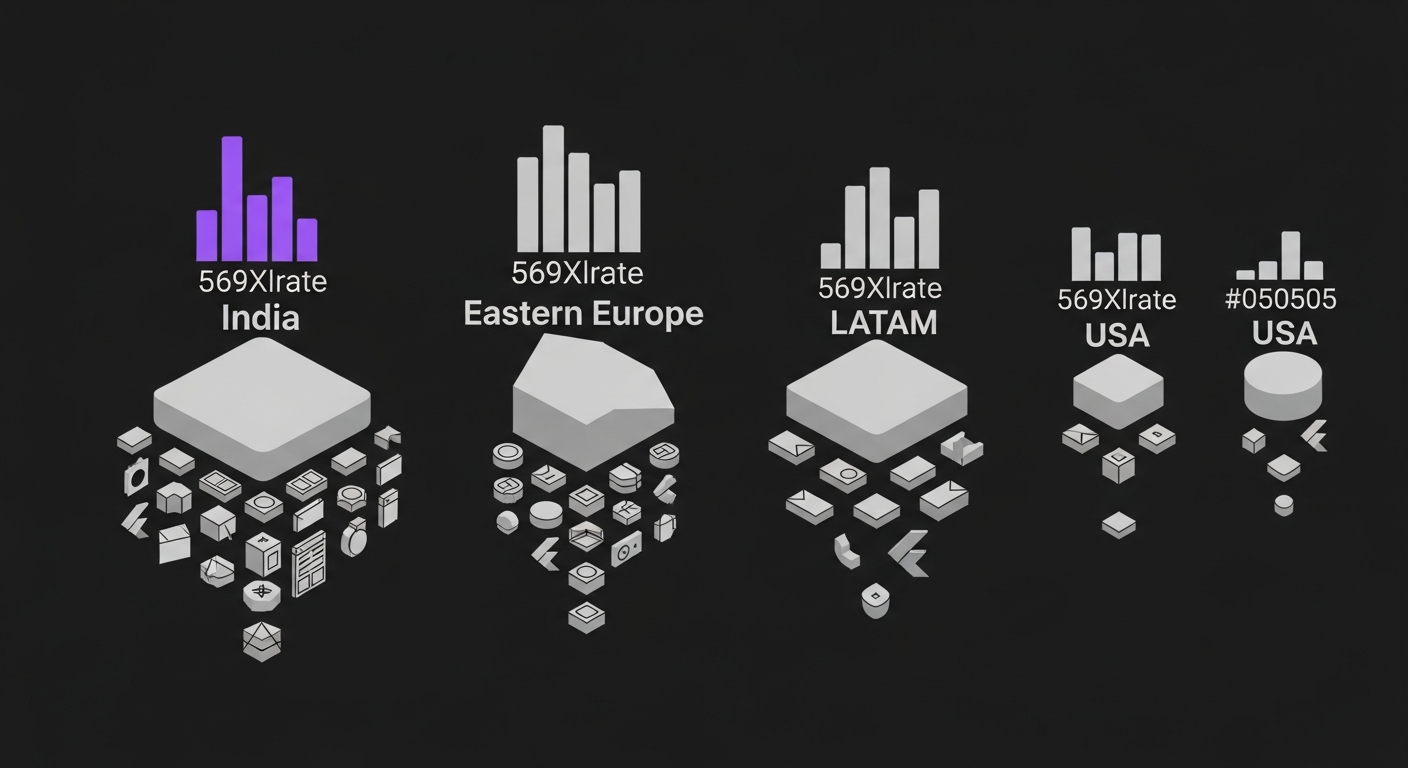
Flutter Developer Hourly Rates 2026: India vs US vs Eastern Europe vs LATAM
Honest 2026 comparison of Flutter developer hourly rates across India, USA, Eastern Europe, and LATAM. Real numbers from our hiring desk, not vendor marketing.
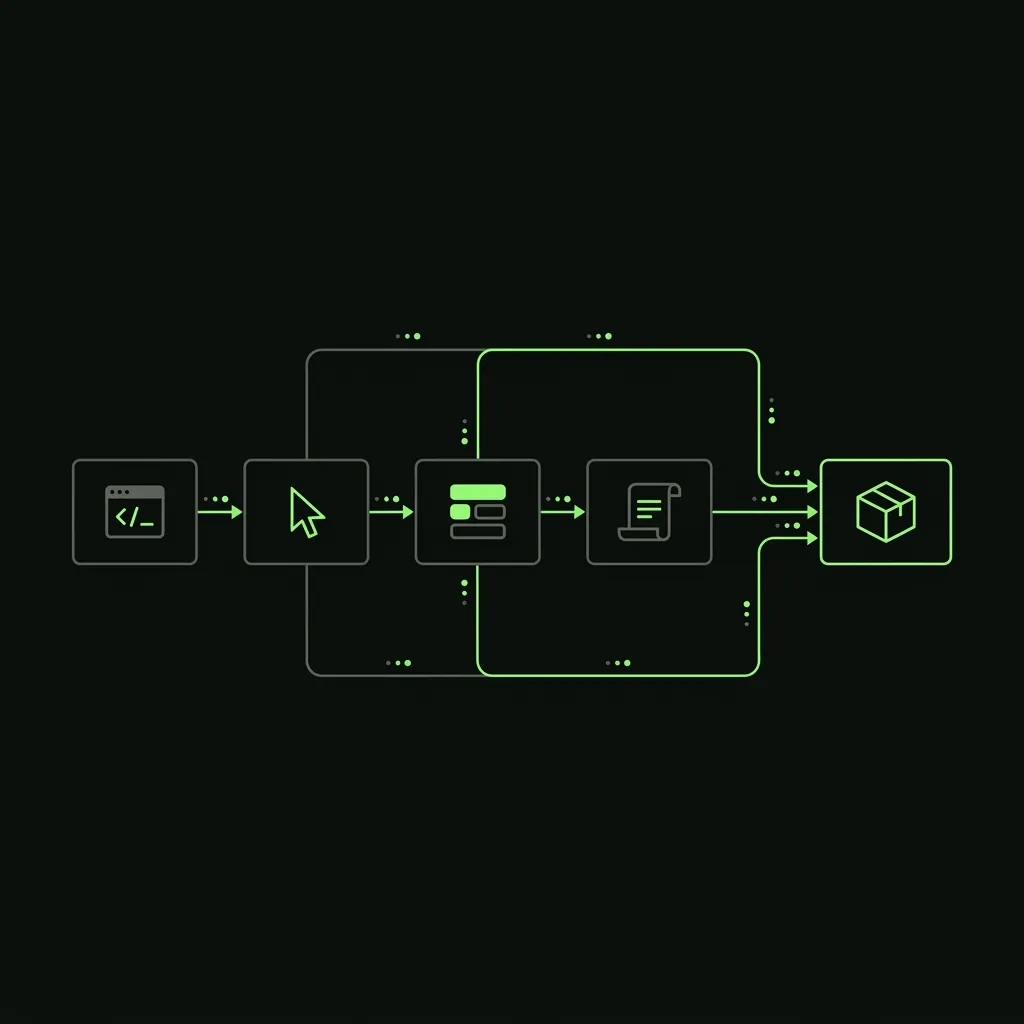
How We Ship Flutter Apps 2× Faster: Claude Code, Cursor, GetWidget, and a 30-Prompt Library
Inside the AI-augmented Flutter workflow we use on every project: Claude Code for agentic multi-file edits, Cursor for in-IDE refactoring, the GetWidget UI kit as a component fabric, and a 30+ prompt library refined across 1,000+ projects. Real velocity data, honest tradeoffs, and the 30% AI still can't own.
Hire vetted, AI-accelerated Flutter developers.
From $18/hr Junior to $60/hr Lead. 48-hour developer match. 30-day replacement guarantee.